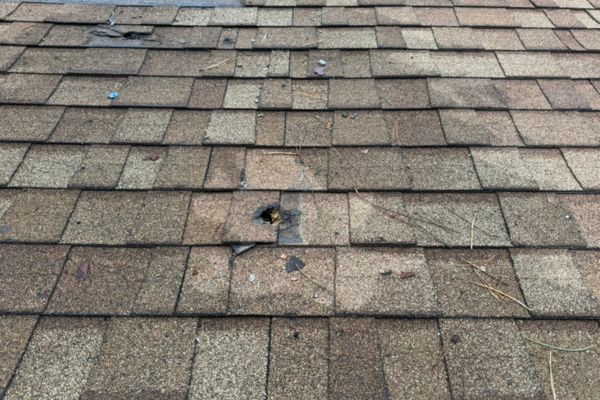
What Are Common Signs of Roof Damage? — Coeur d'Alene & North Idaho Guide (2026)
If your roof is showing signs of damage, catching it early is the difference between a $400 repair and a $14,000 replacement. In North Idaho, the most common signs of roof damage are missing or curling shingles, water stains on interior ceilings, sagging areas on the roof deck, granule loss in gutters, and daylight visible in the attic. Because Coeur d'Alene and the surrounding Hayden, Post Falls, and Rathdrum areas experience heavy snowfall, freeze-thaw cycles, and ice damming, roof damage here tends to progress faster than in milder climates — and it rarely fixes itself.
Table of Contents
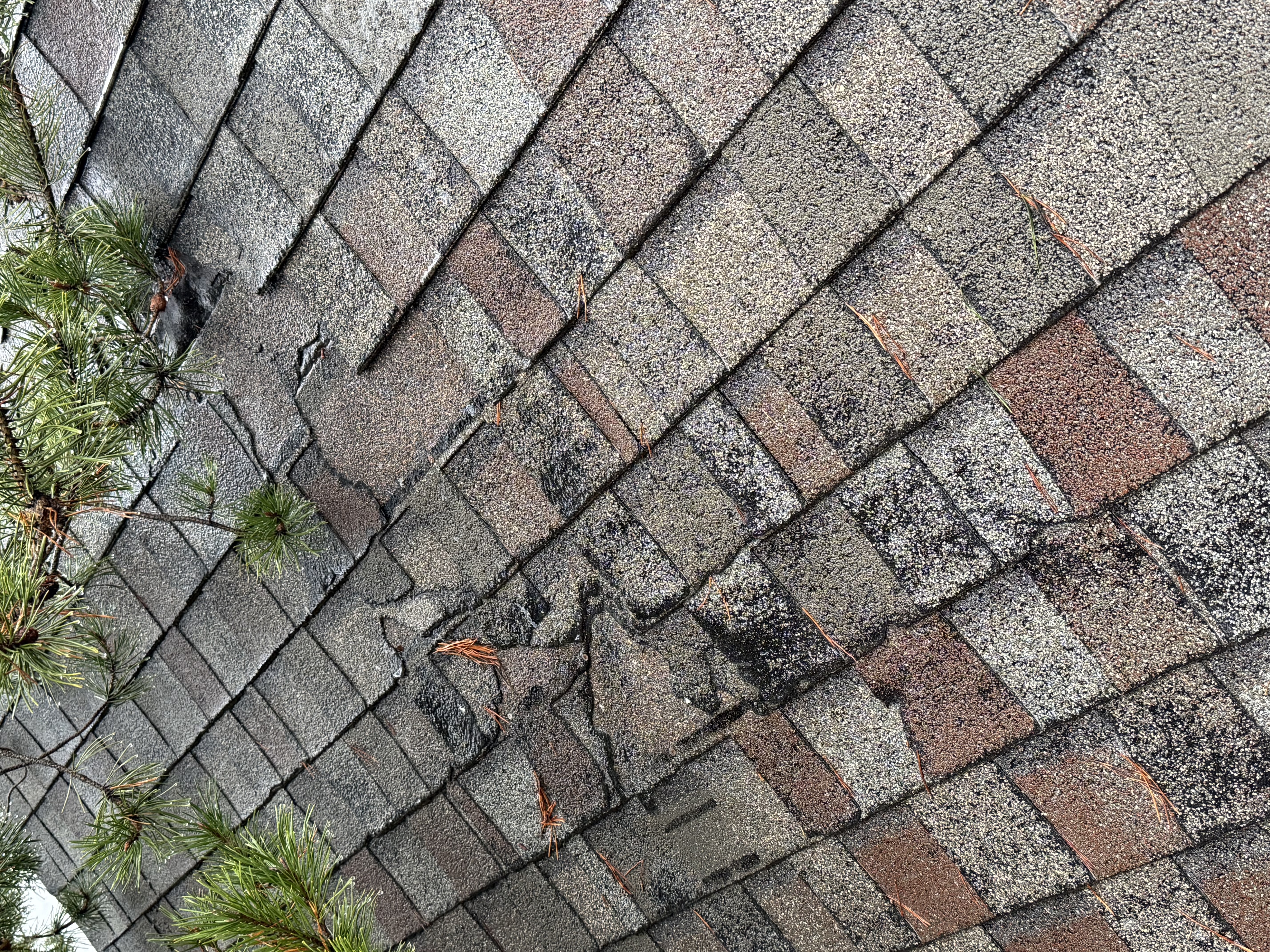
1. Missing, Curling, or Cracked Shingles
Shingles are your roof's first line of defense. When they go missing, curl at the edges, or develop cracks, your decking and attic become exposed to moisture.
What to look for:
Shingles that are visibly missing after a storm
Edges that curl upward (cupping) or downward (clawing) — both signal the shingle is at end of life
Cracked or brittle shingles that break apart when touched
In North Idaho, temperature swings between winter lows and summer heat cause shingles to expand and contract repeatedly. Most architectural shingles have a lifespan of 25–30 years, but this thermal cycling — especially in Coeur d'Alene and Hayden — can shorten that by 5–7 years if ventilation is poor.
Repair cost range: A localized shingle repair in the CDA area typically runs $350–$900 depending on accessibility and the number of damaged shingles.
2. Water Stains on Ceilings or Interior Walls
Water stains are often the first sign homeowners notice — and by the time they appear inside, the leak has usually been going on longer than you think.
Dark spots or rings on your drywall ceiling, peeling paint near exterior walls, and musty smells in upstairs rooms all point to moisture infiltrating through the roof system. Don't make the mistake of assuming a small stain means a small problem. Water travels horizontally along joists and insulation before it drips down, so the stain on your ceiling may be several feet from the actual entry point.
3. Granules in Your Gutters
Asphalt shingles are coated with granules that protect the asphalt layer from UV damage. When you start finding heavy granule deposits in your gutters or at the base of your downspouts, your shingles are nearing the end of their effective life.
Some granule loss is normal in a new roof's first few months. But if your roof is more than 10 years old and you're seeing significant accumulation — especially after rain — that's a clear signal that shingle deterioration is accelerating. A quick look in your gutters after the next rain will tell you a lot.
4. Sagging or Uneven Roof Deck
A sagging roofline is one of the most serious signs of structural roof damage. It typically indicates one of three things: rotted decking beneath the shingles, compromised rafters, or long-term moisture intrusion that has weakened the structure.
Stand at the edge of your property and look at your roofline from a distance. It should be straight and even. Any visible dips, waves, or drooping sections — especially near the center of the roof — need professional evaluation immediately. This is not a wait-and-see situation.
In the Hayden and Post Falls area, heavy snow accumulation without proper drainage can accelerate deck rot in as little as 2–3 winter seasons if an existing leak goes unaddressed.
5. Daylight Visible in the Attic
On a bright day, go into your attic and turn off the lights. If you can see pinpoints or beams of daylight coming through the roof boards, you have gaps in your roof system — and where light gets in, water does too.
While you're up there, also check for:
Damp or wet insulation (it compresses and loses R-value)
Dark streaks or staining on the underside of the decking
Frost buildup in winter (a sign of poor ventilation, which accelerates shingle deterioration)
6. Damaged or Missing Flashing
Flashing is the metal strip that seals transitions — where your roof meets a chimney, skylight, vent pipe, or wall. It's one of the most common entry points for water, and one of the most overlooked during DIY inspections.
Signs of flashing failure include:
Visible rust, cracks, or separation
Lifted edges where the sealant has dried out and pulled away
Water stains directly below a chimney or skylight
Flashing repairs in Coeur d'Alene typically run $200–$600 per penetration point, and addressing them early prevents the far more expensive damage that follows.
7. Ice Dams and North Idaho-Specific Roof Damage
This one is specific to homeowners in Coeur d'Alene, Hayden, Rathdrum, and the surrounding North Idaho area.
Ice dams form when heat escaping from a poorly insulated or ventilated attic melts snow on the upper portion of the roof. That water runs down and refreezes at the eaves, creating a dam. Water then backs up under the shingles and into the home.
Signs your roof has ice dam damage:
Icicles forming at the roofline (especially large ones)
Water stains appearing specifically at exterior walls or near eaves in late winter or early spring
Shingles that lift or crack at the lower edges of the roof
Interior water damage that only appears during or after freeze events
Ice dam damage is one of the top causes of premature roof failure in North Idaho. The fix isn't just a roof repair — it requires addressing attic ventilation and insulation alongside any shingle work.
Frequently Asked Questions
How do I know if my roof damage is covered by insurance?
If the damage was caused by a sudden event — storm, hail, wind, or ice — it's likely covered under your homeowner's policy. Damage from wear and aging typically is not. A professional roof inspection with a written report gives you the documentation your insurance adjuster needs. Elevated Roofing Partners provides inspection documentation for insurance claims.
How often should I have my roof inspected in North Idaho?
At minimum, once a year — and always after a major storm. North Idaho's winters are hard on roofs. A quick inspection each spring catches ice dam damage, lifted flashing, and any shingles that shifted during freeze-thaw cycles before the next rain season compounds the problem.
Can I inspect my roof myself?
You can do a basic visual inspection from the ground and from inside your attic. But a professional catches what you can't — soft spots in the decking, micro-cracks in flashing, and early-stage granule loss that isn't yet visible from the yard. For Coeur d'Alene homes, we recommend a professional inspection every 1–2 years regardless of visible symptoms.
What's the difference between a repair and a full replacement?
If damage is isolated — a section of missing shingles, failed flashing, one problem area — a repair makes sense. If more than 25–30% of the roof surface is compromised, or if the shingles are approaching end of life across the whole roof, replacement is typically more cost-effective long-term. A repair on a failing roof often costs you twice: once for the repair, once for the replacement you needed anyway.
How much does a roof repair cost in the Coeur d'Alene area?
Minor repairs — patching shingles, sealing flashing — typically run $300–$900 in the CDA and Hayden area. Moderate repairs involving decking, multiple sections, or flashing on several penetrations can run $1,200–$3,500. A full replacement for a standard 2,000 sq ft home in North Idaho typically costs $10,000–$18,000 depending on materials and roof complexity.
Get a Free Roof Inspection in Coeur d'Alene
If you're seeing any of these signs, don't wait until the next storm makes it worse. Elevated Roofing Partners offers free roof inspections for homeowners in Coeur d'Alene, Hayden, Post Falls, Rathdrum, and surrounding North Idaho communities.
We'll give you an honest assessment — what's damaged, what's borderline, and what's fine — with no pressure and no upselling. If you need documentation for an insurance claim, we provide that too.
