Metal Roofing That Outlasts Everything Else on Your House
Standing seam and exposed fastener panels. 40+ colors. 40-year paint warranty. Manufactured 15 minutes from our office. Here's the full lineup.
Why We Install Metal America
Most metal roofing you see in Idaho comes from manufacturers in Ohio or Texas, ships across the country on a flatbed, and arrives with lead times measured in weeks. Metal America rolls their panels in Post Falls, about 15 minutes from our office. That means shorter lead times, no shipping damage, and a manufacturer we can actually drive to when something needs attention.
They've been making metal panels for 25 years. They manufacture in-house using Sherwin-Williams coil coatings with a 40-year paint warranty. The steel is G90 galvanized, the same spec you'd find on commercial buildings designed to stand for 60+ years. And they stock over 40 colors so we're not waiting 6 weeks for a special order.
We install five profiles from Metal America. Three standing seam options for homes that want the clean, modern look, and two exposed fastener options for shops, barns, and budget-conscious residential projects. Every panel comes in custom lengths up to 45 feet, which means fewer seams and fewer potential leak points.

1.5" Snap Lock
Concealed fastener standing seam with a clean, modern profile. Snaps together without mechanical seaming, so it installs faster with the same watertight performance. The panel we put on most residential metal roofs.
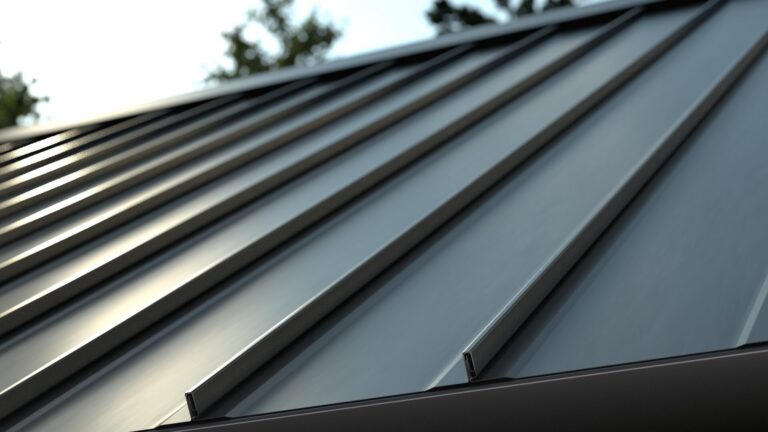
The 1.5" Snap Lock is a concealed fastener panel that clicks together at the seam, no mechanical crimping tool required. That makes it faster to install than a mechanically seamed panel while still providing a fully concealed fastener system that sheds water, snow, and ice without any exposed penetration points.
The fixed clip system accommodates thermal expansion, which matters in North Idaho where roof temperatures can swing 100+ degrees between summer and winter. Available in flat panel, 2 minor ribs, or striation options for different aesthetics. Custom lengths up to 45 feet, or roll-formed on-site for longer runs.
QuickLoc
The most affordable way to get a standing seam roof. Hidden fastener interlocking system with anti-siphon channels. Standing seam performance at exposed fastener pricing.
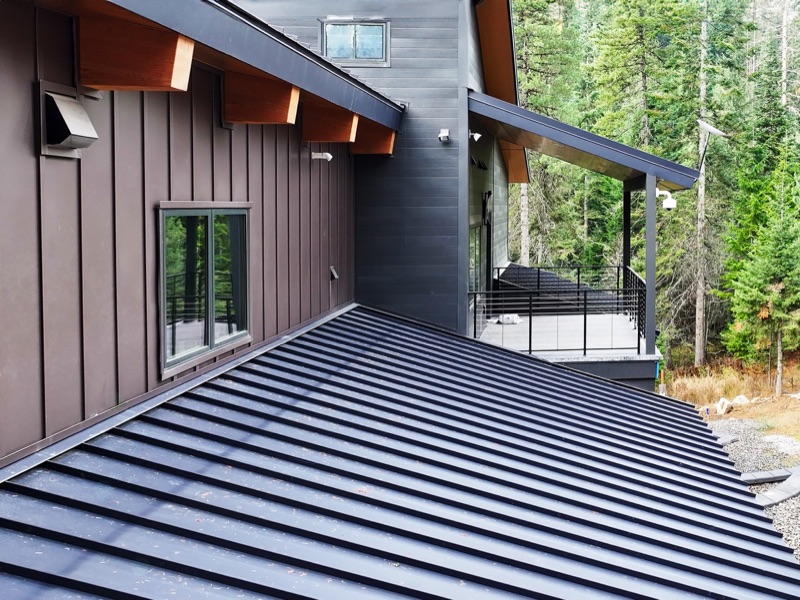
QuickLoc is Metal America's budget entry into standing seam. It uses an interlocking hidden fastener system that installs fast and provides the clean, concealed-fastener look that homeowners want from standing seam. Not a snap-lock, not mechanically seamed. The 16" coverage width means fewer panels per square foot, which speeds up installation and keeps labor costs down.
Anti-siphon channels are built into the panel overlap, so wind-driven rain can't wick up under the seam. The panels come in 20+ colors using Sherwin-Williams premium coatings. If you want a standing seam roof but asphalt shingle pricing is more your budget, QuickLoc closes the gap.
Mechanically Seamed
The highest-performance standing seam panel. Seams are crimped together with a mechanical seaming tool for the tightest possible weather seal. The panel you spec when failure isn't an option.
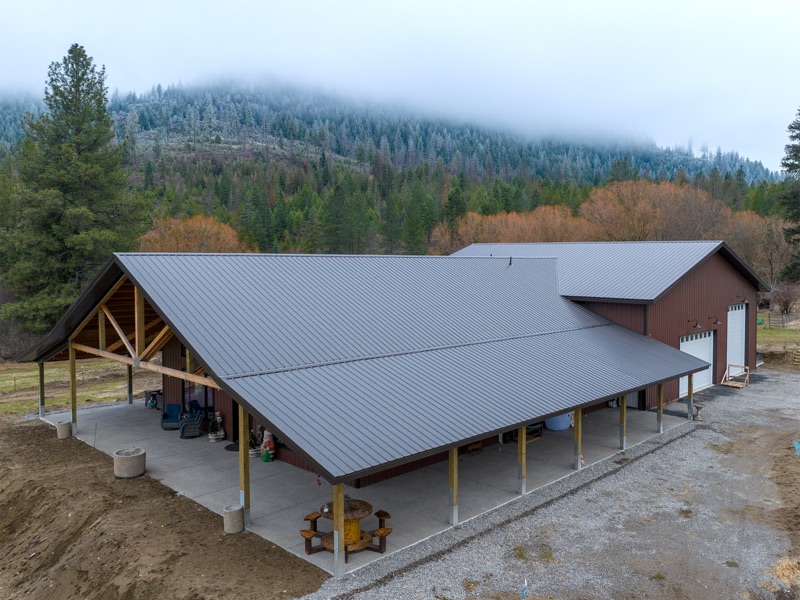
Mechanically seamed panels use a power seaming tool that crimps adjacent panels together after installation. Unlike snap-lock panels that click into place, mechanical seaming creates a double-folded joint that provides the best possible resistance to wind uplift and water infiltration. This is the system you'll find on commercial buildings, airports, and high-end residential where the roof has to perform in the worst conditions.
The concealed floating clip system accommodates thermal expansion across long panel runs, which is critical on larger roofs where panels can grow and shrink by over an inch with temperature swings. Available in 14" and 16" coverage widths with 1.5" or 2" rib heights. Custom lengths up to 45 feet.
Tuff Rib
Budget-friendly exposed fastener panel with 36" coverage for fast installation. Anti-siphon grooves and high-wind rating. The workhorse panel for shops, barns, and budget residential.
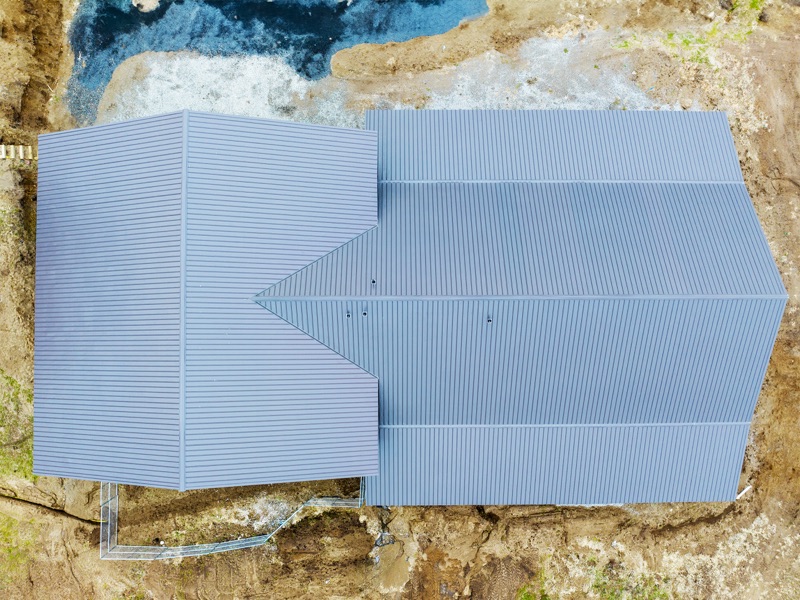
Tuff Rib is an exposed fastener panel with 36" coverage, three feet per panel, which makes it one of the fastest metal roofing systems to install. The anti-siphon grooves at each overlap prevent wind-driven rain from wicking under the panel edges, which is the main failure mode on cheaper exposed fastener systems.
Available in 29 and 26 gauge. The 29 gauge is the budget option for detached shops and outbuildings. The 26 gauge is what we'd put on a house. Thicker steel, better dent resistance. High-wind rated and suitable for installation over open frames, which makes it popular for pole barns and agricultural buildings.
PBR Panel
Commercial-grade R-panel with a 1.25" rib profile. The go-to panel for commercial buildings, large shops, and any structure that needs to shrug off wind, hail, snow, and fire.
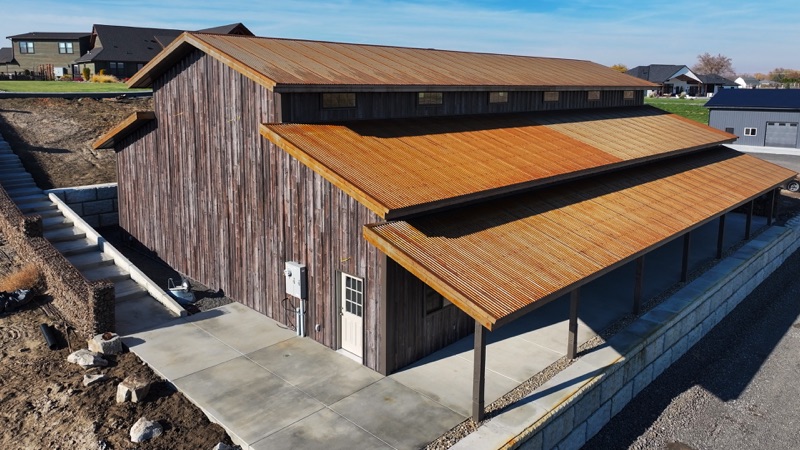
PBR stands for Purlin Bearing Rib. It's the panel you see on commercial buildings, industrial facilities, and serious agricultural structures. The 1.25" raised rib is deeper than Tuff Rib's 3/4" profile, which gives it more structural rigidity and allows it to span wider purlins without deflecting. That deeper rib also creates a more pronounced shadow line that some homeowners prefer for the industrial-modern aesthetic.
Available in 26 and 24 gauge, the PBR handles everything North Idaho can throw at it. Wind, rain, hail, snow loads, and fire. The 1:12 minimum pitch makes it viable for near-flat commercial applications that standing seam handles but most other systems can't. 44+ colors available with color-matching fasteners.
Choose Your Color
Metal America stocks 19 standard WeatherXL colors, 12 premium PVDF colors, and specialty options like COR-TEN weathering steel. Colors may vary on screen. We can bring samples to your home.
WeatherXL Standard Colors (26/29ga)
Sherwin-Williams silicone-modified polyester (SMP) coating. 40-year paint warranty. Stocked locally for fast turnaround.
Metal America also offers 12 premium PVDF (Kynar 500) colors, crinkle finishes, and custom orders. View the full color chart on Metal America's site →
What Goes Into the Panel
WeatherXL SMP Coating
Sherwin-Williams silicone-modified polyester (SMP) coating system. Resists fading, chalking, and weathering for decades. Stain resistant, easy to clean, and backed by a 40-year paint warranty. Applied at the coil level before roll forming, so every inch of panel is uniformly coated.
PVDF Kynar 500 Option
For premium projects, Metal America offers PVDF coatings using Kynar 500 / Hylar 5000 resin, the same finish system used on high-rise buildings and architectural landmarks. Superior fade and chalk resistance compared to SMP. Available in 24 gauge with 12 stock colors and additional custom options.
G90 Galvanized Steel
Every panel starts with Grade 50 steel with a G90 galvanized coating, 0.90 oz of zinc per square foot on both sides. The zinc layer sacrificially corrodes before the base steel, adding decades of corrosion protection even if the paint layer gets scratched. This is the same substrate spec used on commercial and industrial buildings.
Local Manufacturing
Metal America roll-forms every panel in Post Falls, Idaho, which is 15 minutes from our shop. Panels are cut to custom lengths up to 45 feet, or roll-formed on-site for even longer runs. No cross-country shipping damage. Shorter lead times. And if something needs to be remade, we're not waiting weeks for a truck from Ohio.
100% Recyclable Steel
The steel coils are manufactured from recycled ferrous scrap. At the end of its 50-60 year service life, every panel is fully recyclable, unlike asphalt shingles, which go to a landfill. On-site roll forming also reduces carbon emissions by eliminating the need to ship pre-formed panels across the country.
ASTM Tested
Metal America panels are tested to ASTM E1680 (air tightness), E1646 (water penetration), E283 (air infiltration), E331 (water leakage), E330 (structural deflection), and E1592 (racking performance). These aren't marketing claims. They're third-party lab results against the same standards used for commercial building envelopes.
Standing Seam vs. Exposed Fastener
| Feature | Standing Seam | Exposed Fastener |
|---|---|---|
| Fastener Visibility | Concealed, no visible screws | Exposed screws through panel face |
| Weather Seal | Superior, no penetration points | Good, relies on rubber washers |
| Thermal Movement | Clip system allows expansion | Screws resist movement, can cause oil-canning |
| Minimum Pitch | 2:12 (Snap Lock / Mech. Seam) | 1:12 (PBR) to 3:12 (Tuff Rib) |
| Cost | $$$, higher material and labor | $$, lower material and faster install |
| Install Speed | Slower, clips and seaming | Faster, screw and go |
| Aesthetics | Clean, modern, architectural | Agricultural, industrial, utilitarian |
| Maintenance | Near zero | Check/replace washer screws every 15-20 years |
| Best For | Homes, visible commercial | Shops, barns, outbuildings, budget residential |
| Lifespan | 50-60+ years | 40-50 years (screws limit lifespan) |
Common Questions About Metal Roofing
Standing seam metal roofs typically last 50-60+ years with virtually no maintenance. Exposed fastener panels last 40-50 years. The limiting factor is the rubber washers on the screws, which need checking and occasional replacement around the 15-20 year mark. Compare that to asphalt shingles at 20-30 years. Metal also holds up better to North Idaho's freeze-thaw cycles, snow loads, and wind events. Most metal roofs will outlast two or three asphalt roofs.
Not on a properly installed residential roof. When metal is installed over solid decking (plywood or OSB) with underlayment, which is how we install every residential metal roof, the sound level is virtually identical to asphalt. The "loud metal roof" perception comes from barns and shops where metal is installed directly over open purlins with no decking or insulation. That's a completely different installation method than what goes on a house.
Standing seam panels connect at raised seams with concealed clips, so no screws go through the panel face. This creates a cleaner look and eliminates the biggest maintenance point (screw washers). Exposed fastener panels have screws driven directly through the panel face into the roof deck. They cost less and install faster, but the rubber washers on those screws will eventually dry out and need attention. Standing seam is what we recommend for homes. Exposed fastener is a solid choice for detached shops, barns, and budget projects.
Metal handles snow better than any other roofing material. Snow slides off the smooth surface rather than sitting and adding load. We install snow guards and snow rails where needed to control when and where snow releases. You don't want a roof avalanche over your front door. The steel substrate doesn't absorb water, so freeze-thaw damage that destroys asphalt and concrete tile over time doesn't apply. Metal roofs are also rated for the snow loads we see at elevation in Kootenai and Bonner counties.
Yes, with the right footwear and technique. We walk on metal roofs regularly during installation, maintenance, and inspections. The key is soft-soled shoes and stepping on the flat areas between ribs (not on the ribs themselves). Standing seam with a flat pan is the easiest to walk on. Exposed fastener with taller ribs requires more care. We wouldn't recommend homeowners getting on their own metal roof, not because of the metal, but because any roof is a fall risk without proper safety equipment.
No. Metal roofing does not increase the likelihood of a lightning strike. Lightning strikes the highest point in an area regardless of material. A metal roof is actually safer than other roofing materials during a lightning strike because metal is non-combustible and conducts the electrical charge safely to ground. It won't catch fire. You're no more likely to get struck with a metal roof than with asphalt, tile, or wood.
Metal costs more upfront, roughly 2-3x the installed cost of standard asphalt shingles. But the math changes when you factor in lifespan. An asphalt roof lasts 20-25 years. A metal roof lasts 50-60. Over a 60-year period, you'd replace an asphalt roof 2-3 times versus one metal installation. When you add in the maintenance savings, insurance discounts (many carriers offer reduced premiums for metal), and energy efficiency, metal often costs less per year of service than asphalt.