Storm Damage? We Know the Insurance Process.
We document the damage, work with your adjuster, and handle the repair once the claim is approved.
Most Homeowners Miss Covered Damage
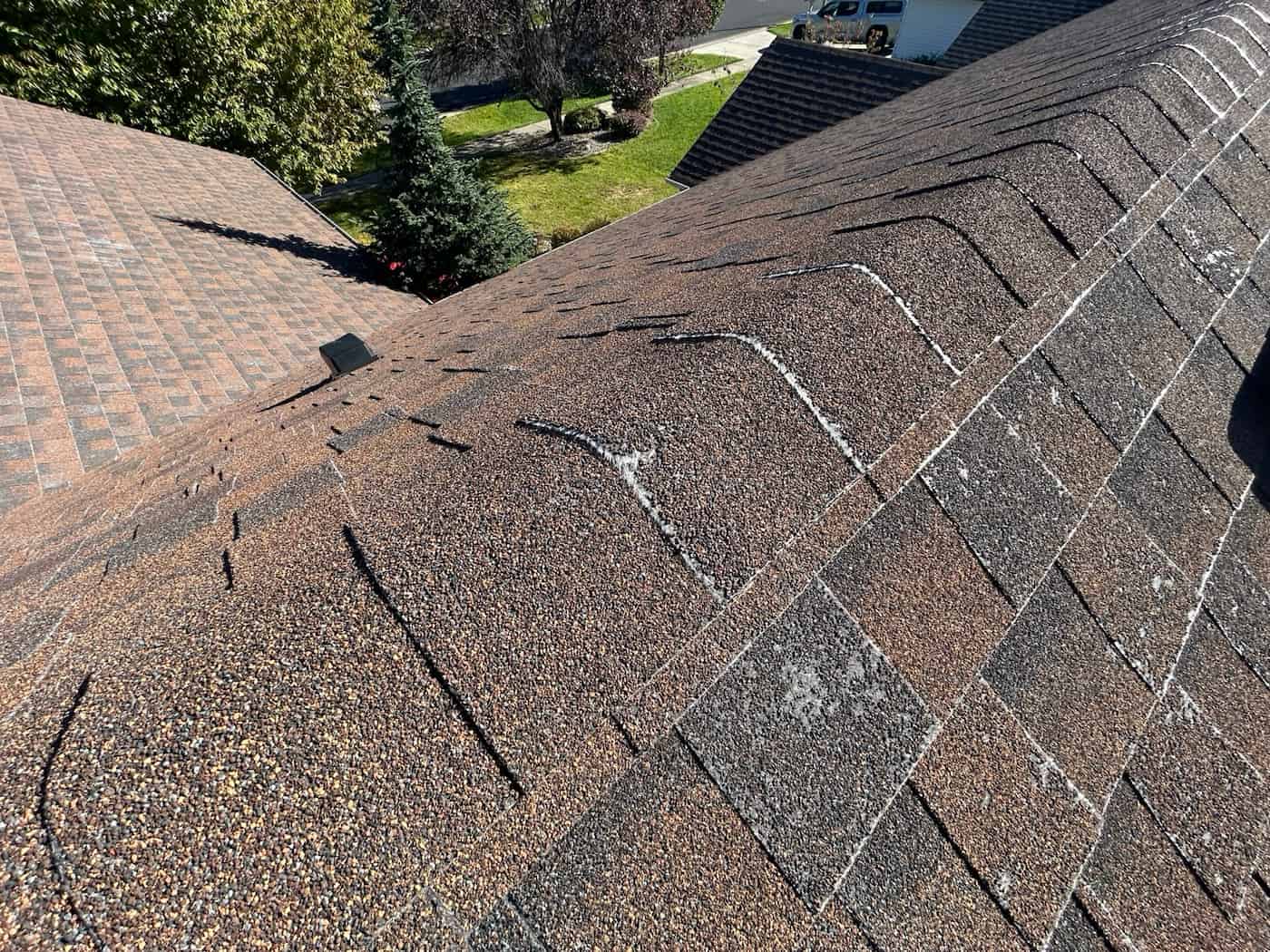
North Idaho gets hail. It gets high wind events that lift shingles and ridge caps. Heavy snow loads can stress roofing materials, and ice dams in hard winters cause water infiltration that looks like a leak but is actually storm-related damage that may be covered. The problem is that most of this damage isn't obvious from the ground. Hail bruises asphalt shingles in ways that are invisible until you're standing on the roof looking at specific impact patterns. Wind damage to flashing and ridge material is easy to miss if you don't know what a failed tab seal looks like.
Homeowners often pay out of pocket for repairs that their insurance would have covered — either because they didn't know to file a claim, didn't file quickly enough, or because the damage wasn't documented correctly when they did file. The adjuster has to be able to see what you're claiming. Vague descriptions and no photos don't move claims forward. Specific documentation of impact locations, granule displacement, dent patterns, and structural damage does.
We get on the roof after every significant storm call and photograph what we find — hail impact density, shingle damage patterns, flashing displacement, anything that's claim-relevant. We'll tell you honestly if what we see is worth filing on, and we'll tell you if it isn't. Filing a weak claim wastes your time and can complicate your policy. We only go to bat for claims with real documentation behind them. Once your claim is approved, we handle the repair or replacement to the approved scope, documented for your records.
Not sure whether your situation actually qualifies for a claim? Our breakdown of what homeowners insurance covers on a roof replacement walks through the triggers, exclusions, and the ACV vs RCV fine print that decides what you actually get paid.
How It Works
Why Homeowners Call ERP After a Storm
Common Questions
Hail damage is often invisible from the ground. Wind damage is more obvious — lifted or missing shingles, damaged ridge caps. The safest move after any significant storm is to call for an inspection. We'll tell you what we find.
Possibly, depending on your insurer and policy. That's a question for your insurance agent. What we can tell you is that ignoring covered damage and paying for repairs out of pocket when you're entitled to a claim rarely makes financial sense.
Most policies have a window of one to two years from the date of damage, but some are shorter. Don't wait. The sooner you document the damage, the cleaner the claim.
Related Services
We offer storm damage repair and insurance claim assistance in Hayden, Coeur d'Alene, Post Falls, Rathdrum, Athol, Sandpoint, Liberty Lake, Spokane Valley, and Spokane.