Wind is the number one cause of roof damage in North Idaho. Not hail, not snow. Wind. Just this past month, a major windstorm rolled through the area and affected homes all across Coeur d'Alene, Hayden, Post Falls, and Rathdrum. Shingles ripped off, ridge caps lifted, flashing pulled away from chimneys. A lot of homeowners woke up to debris in the yard and had no idea what to do next.
The good news is that filing an insurance claim for storm damage is not nearly as complicated as most people think. There is a clear process to follow, and if you know what to do (and what not to do), you will be in solid shape. This article walks you through every step. If you are still trying to figure out whether your situation even qualifies for coverage in the first place, start with our breakdown of what homeowners insurance actually covers on a roof replacement, then come back here for the filing process.
Right After the Storm: Document Everything
The first thing you should do after a storm is grab your phone and take pictures. Walk around the outside of your house and photograph everything you can see from the ground. Your roof, your gutters, your siding, your yard. Get wide shots of the whole house and close-ups of anything that looks off. Shingles on the ground, dented gutters, cracked siding, branches on the roof. All of it.
Make sure your phone date and time stamp is on. This matters. Insurance companies want to see that the damage happened when the storm happened, not six months later. Even if you look up at your roof and think it looks fine, take the photos anyway. A lot of wind damage is invisible from the ground. Shingles can be lifted, creased, or partially torn without looking obviously wrong from the driveway. But having ground-level photos from the day of the storm creates a record that starts the clock in your favor.
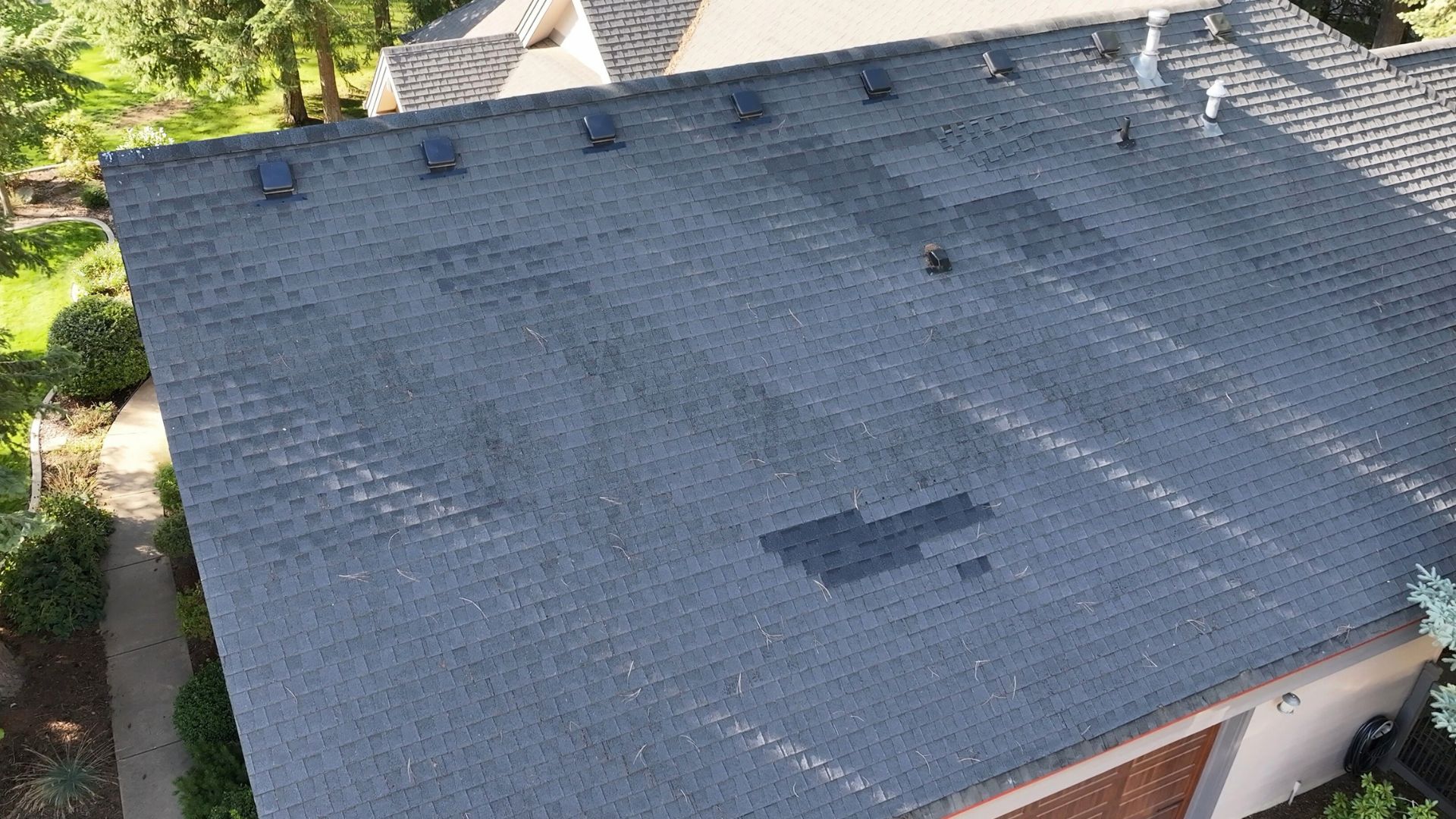
Wind damage from above. Missing shingles expose the underlayment underneath, which is your roof's last line of defense against water.
If there is debris in the yard or on the roof, photograph it before you clean it up. Once you haul that tree limb to the curb, you have lost a piece of evidence. Take the photos first, clean up second.
Step One: Call a Roofer First
This is where most guides get the order wrong. They tell you to call your insurance company first. We think you should call a roofer first. Here is why.
Insurance is a business. Their job is to settle claims for as little as possible. That is not a knock on them. It is just how it works. When the adjuster shows up, they are looking at your roof through the lens of what the insurance company needs to pay. A roofer is looking at your roof through the lens of what actually needs to be fixed.
A professional roof inspection before you file gives you a complete picture of the damage. Your roofer will climb up, document everything with photos and measurements, and put together a written report. That report becomes your strongest tool when the insurance process starts. You are not guessing at what is wrong. You know.
A good roofer will also catch damage you would never see from the ground. Wind does not just blow shingles off. It lifts them, creases them, and breaks the seal strip that holds them down. A shingle can look fine from 30 feet away but be completely compromised up close. Your roofer will also check flashing around vents and chimneys, ridge cap condition, and whether the underlayment has been exposed anywhere. These are the details that matter when it is time to get the claim approved.
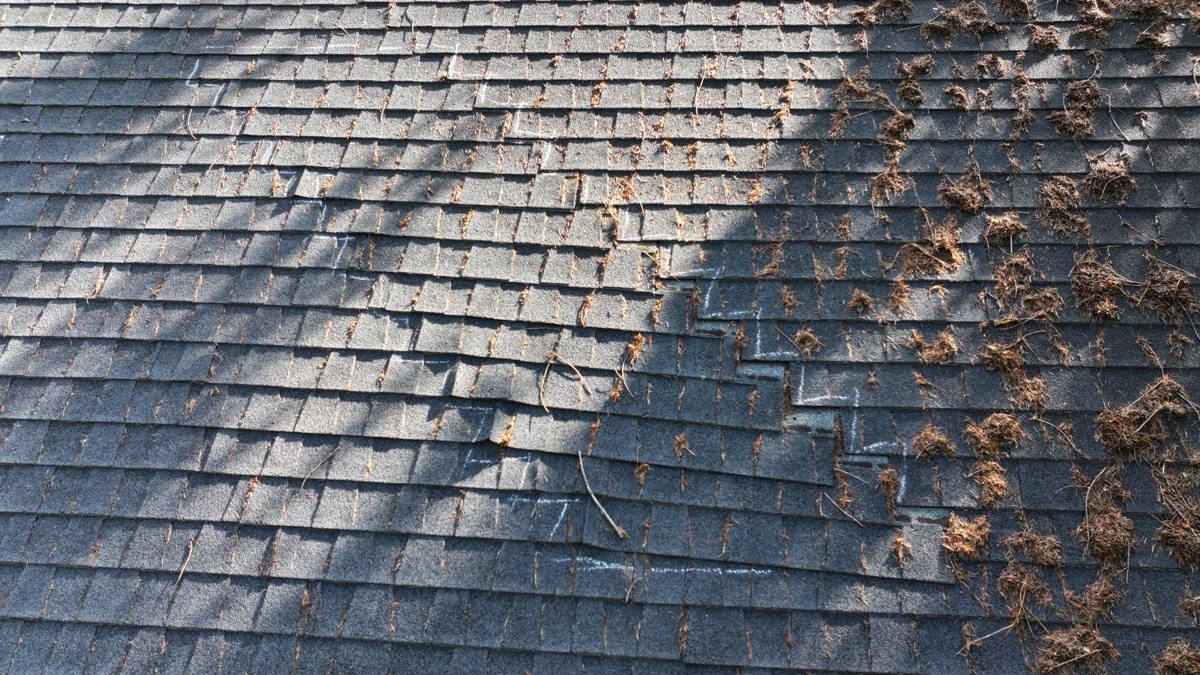
Shingles lifting and separating after wind exposure. This kind of damage is easy to miss from the ground.
Step Two: File the Claim
Once your roofer has inspected the roof and you have their report, call your insurance company and open a claim. Do not put this off. Most homeowner policies have a window for reporting damage, and waiting weeks or months can give them a reason to push back.
When you call, write down two things: your claim number and the name of the adjuster assigned to your case. You will need both of those later. The insurance company will schedule a time for the adjuster to come out and inspect the property. That visit might be a few days away or a few weeks, depending on how busy things are. Big storms mean a lot of claims all at once, so it can take a while.
Having your roofer's report in hand before you make this call means you already know what you are dealing with. You are not calling to say "I think something might be wrong." You are calling to say "We have documented damage and here is what was found."
Step Three: The Adjuster Visit
The insurance adjuster works for your insurance company. Their job is to inspect the damage and write an estimate for what it will cost to repair. They will usually walk the roof, look at the siding, check the gutters, and note what they see. Then they will put together a scope of work and a dollar amount.
Here is the thing to understand: the adjuster's estimate is their starting point, not necessarily the final number. Adjusters see a lot of roofs and they are generally fair, but they can miss things. Especially if the damage is subtle or if they are dealing with dozens of inspections that week.
This is where having a roofer on your side matters. If your contractor found damage that the adjuster did not include, your contractor can submit what is called a supplement. That is a formal request to add items to the scope, backed by photos and measurements. It is a normal part of the insurance process and it happens all the time.
If possible, have your roofer present during the adjuster's visit. Not to argue or push back, but to point things out and make sure nothing gets overlooked. Two sets of eyes on the roof are always better than one.
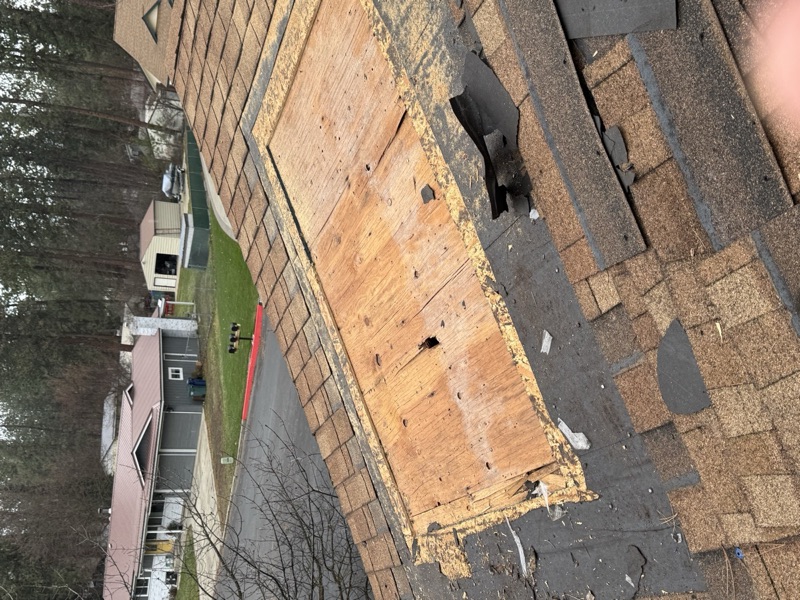
When wind rips shingles clean off, the bare decking is exposed to the elements. This is the kind of damage that needs to be documented immediately.
Step Four: Review the Scope
Once the adjuster sends over their report, sit down with your roofer and compare it to the inspection findings. Look at what is included and what is not. Sometimes an adjuster will account for shingle replacement on one slope but miss another. Or they will leave out flashing repairs or underlayment replacement that your roofer documented.
If things are missing, your contractor can file a supplement or request a re-inspection. This is not fighting with the insurance company. It is just making sure the scope matches the actual damage. Insurance is supposed to cover what the storm broke. If something got left off the list, it deserves a second look.
Had a recent windstorm? We do free inspections across North Idaho and Eastern Washington. We will document everything and walk you through your options.
Schedule a Free InspectionCommon Mistakes That Cost Homeowners Money
The biggest mistake people make is waiting too long to file. A storm hits in March, they do not notice a leak until summer, and by then the insurance company says the damage should have been reported sooner. Even if your roof looks fine from the ground, get it inspected and file the claim early. You can always close it later if there is no damage.
The second most common mistake is cleaning up before documenting. That fallen tree limb, those scattered shingles in the yard, the dented downspout. All of that is evidence. If you haul it away before taking photos, you have made your claim harder to prove. It takes five minutes to walk around with your phone. Do it before you touch anything.
Another big one is not reading your policy. Every policy has a deductible, and that is the amount you pay out of pocket before insurance kicks in. For a lot of homeowners around here, that is somewhere between $1,000 and $2,500. Your policy also has coverage limits and specific language about what is covered and what is excluded. It is worth reading those sections so you know what to expect before the adjuster even shows up.
And the biggest mistake of all: not having a roofer inspect the damage before the adjuster arrives. Without a professional assessment, you are relying entirely on the insurance company to tell you what is wrong with your own roof. Get someone on your side first.
Red Flags in Contractors
After every big storm, trucks from out of state roll into town. Guys going door to door, offering to handle everything for you. Some of them are fine. A lot of them are not. Here is what to watch for.
If a contractor offers to "cover your deductible" or "waive your deductible," walk away. That is insurance fraud. Your deductible is your financial responsibility under the policy. When a contractor says they will cover it, what they are really doing is inflating the claim to make up the difference. If the insurance company catches it, you are the one holding the bag. Not the contractor.
If someone pressures you to sign a contract before the adjuster has even visited, that is another red flag. There is no reason to commit to a contractor before you know the scope of the damage or what insurance will cover. A good contractor will give you time to understand your options. A bad one wants your signature before you have had a chance to think.
Check for local licensing. In Idaho, contractors need to be registered with the state. In Washington, they need a valid contractor license. Ask for the license number and look it up. If they cannot provide one, or if they give you the runaround, that tells you everything you need to know. Storm chasers move from town to town chasing weather events. When something goes wrong with your roof six months later, they are three states away and their phone number does not work anymore.
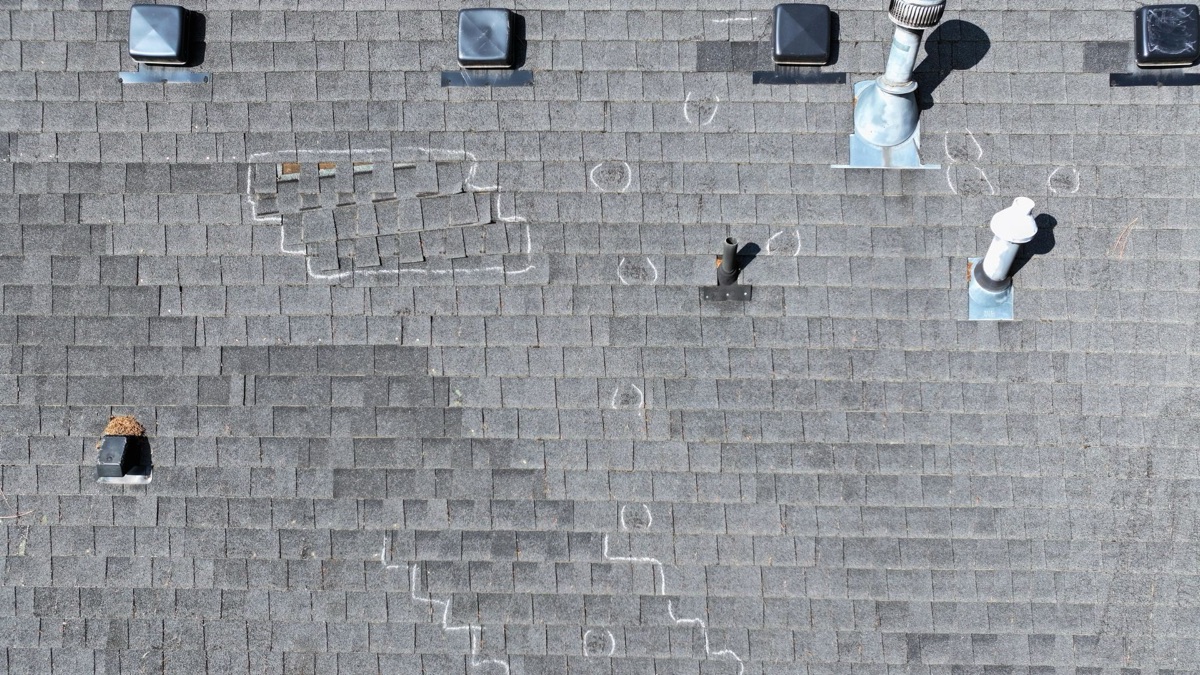
A professional inspection marks and documents every area of damage before the adjuster arrives.
How We Handle Insurance Claims at ERP
We are not going to pretend we have been doing this for 30 years. We have not. But we know how insurance claims work, we inspect roofs thoroughly, and we do not play games with the process.
When a homeowner calls us after a storm, we go out and walk the roof first. We take detailed photos and measurements of every bit of damage we can find. We put together a written report so you know exactly what you are dealing with before you ever call insurance. When the adjuster comes out, we will be there to walk the roof with them and make sure nothing gets missed. After the adjuster writes their scope, we compare it to our findings. If something is missing, we submit a supplement with the documentation to back it up.
We do not pressure anyone to sign anything. We do not offer to cover deductibles. We do not knock on doors after a windstorm. We just try to make sure your roof gets fixed the right way and that nothing falls through the cracks in the insurance process. That is it.
Wind Is the Reality in North Idaho
This part of the country gets real wind. Gusts pick up off the lake and catch roofs that are already aging. Trees come down. Ridge caps lift. Flashing pulls away. And if you live anywhere near ponderosa pines (which is most of us in Hayden, Coeur d'Alene, Post Falls, and Rathdrum), falling branches are a fact of life.
Storm damage is not a rare event around here. It is something most homeowners will deal with at some point. Knowing the process ahead of time makes it a lot less stressful when it actually happens. Save this article somewhere. Hopefully you will not need it anytime soon, but if a storm rolls through tonight and you wake up to shingles in the yard, you will know exactly what to do.
If you have had a recent storm and you are not sure whether your roof took a hit, give us a call or schedule an inspection online. We will come out, take a look, and tell you what we see. No pressure, no sales pitch. Just an honest look at your roof.