Homeowners insurance covers a roof replacement when the damage is caused by a sudden, covered event such as a windstorm, hail, fire, or a fallen tree. It does not cover a roof that has simply aged out, worn down, or been damaged by years of deferred maintenance. In North Idaho, wind is the most common trigger for an approved claim. Not hail, not snow load. Wind.
That clean answer hides a lot of fine print. Whether your specific roof gets approved depends on the cause of the damage, the age and condition of the roof before the storm, the type of policy you carry (named-peril vs open-peril), and whether your carrier pays actual cash value or replacement cost. We replace roofs across Hayden, Coeur d'Alene, Post Falls, Rathdrum, and the rest of our North Idaho service area, and we walk dozens of homeowners through this question every storm season. Here is what actually matters.
The Short Answer: Yes for Storm Damage, No for Wear and Tear
Insurance is built to cover sudden, accidental losses. Not predictable, gradual ones. That is the dividing line for almost every roof claim.
- Covered: Wind damage, hail, fallen trees, fire, lightning, sudden water from a covered event.
- Not covered: Normal aging, granule loss from sun exposure, leaks from old flashing, pre-existing damage that was not reported, gradual water seepage, and most cosmetic-only damage. Ice dam damage sits in a gray area: many policies cover the sudden water intrusion, but the carrier may deny if they decide the underlying cause was deferred maintenance.
The trickiest cases sit on the line: a roof that was already old and got pushed over the edge by a wind event, or hail damage that is real but only cosmetic. Those claims still get filed and often get approved, but the documentation has to be tight. That is where having a roofer on your side before you call the carrier changes the outcome.
What Triggers Coverage (Covered Perils)
Standard homeowners policies in Idaho and Washington list "covered perils" that trigger a roof claim. Here is what we see most often around here.
Wind Damage (the #1 Trigger in North Idaho)
Wind is the cause of most roof claims we see across Hayden, Coeur d'Alene, and Post Falls. Gusts come off the lake, catch aging shingles, and lift them. Sometimes they tear shingles clean off and you find them in the yard. More often the damage is harder to spot: shingles get lifted, creased, and the seal strip on the back breaks. From the ground the roof looks fine. From a ladder you can see it is compromised.
Wind damage is almost always covered under a standard HO-3 policy. The challenge is proving it. A shingle that has been lifted and re-laid by the wind does not look obviously damaged in a photo from 30 feet away. That is why a professional roof inspection matters before the adjuster shows up.
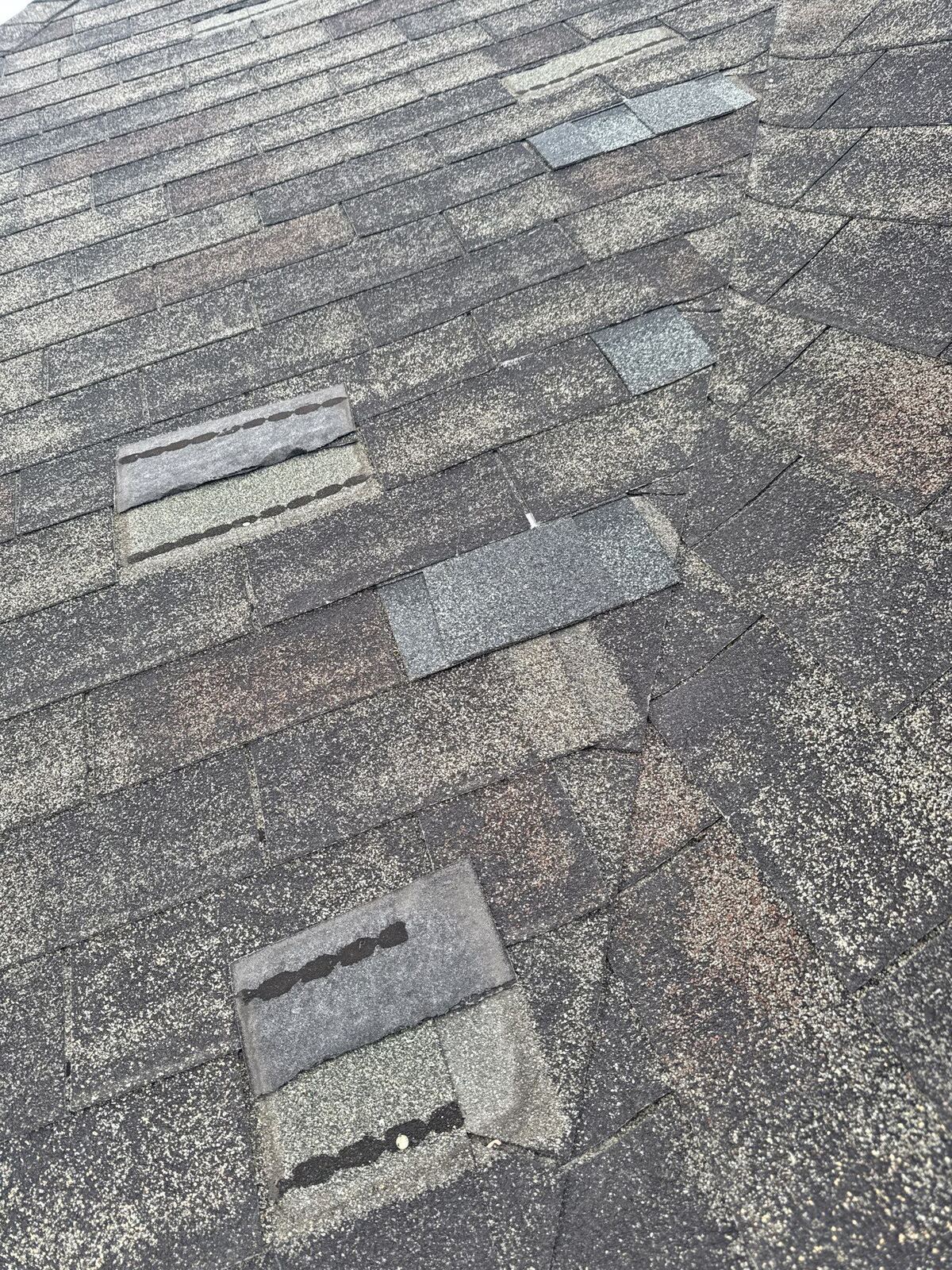
Wind damage up close. Shingles that look fine from the driveway can be broken, lifted, or have a failed seal strip. The carrier needs photos like this to approve the claim.
Hail Damage
Hail is less common in North Idaho than in the Plains states, but it happens, and it can total a roof. Hail leaves circular bruises, granule loss in tight clusters, and exposed fiberglass mat. Most carriers cover hail damage to the roof, and many will replace the whole roof if a representative sample of the slope shows enough hits.
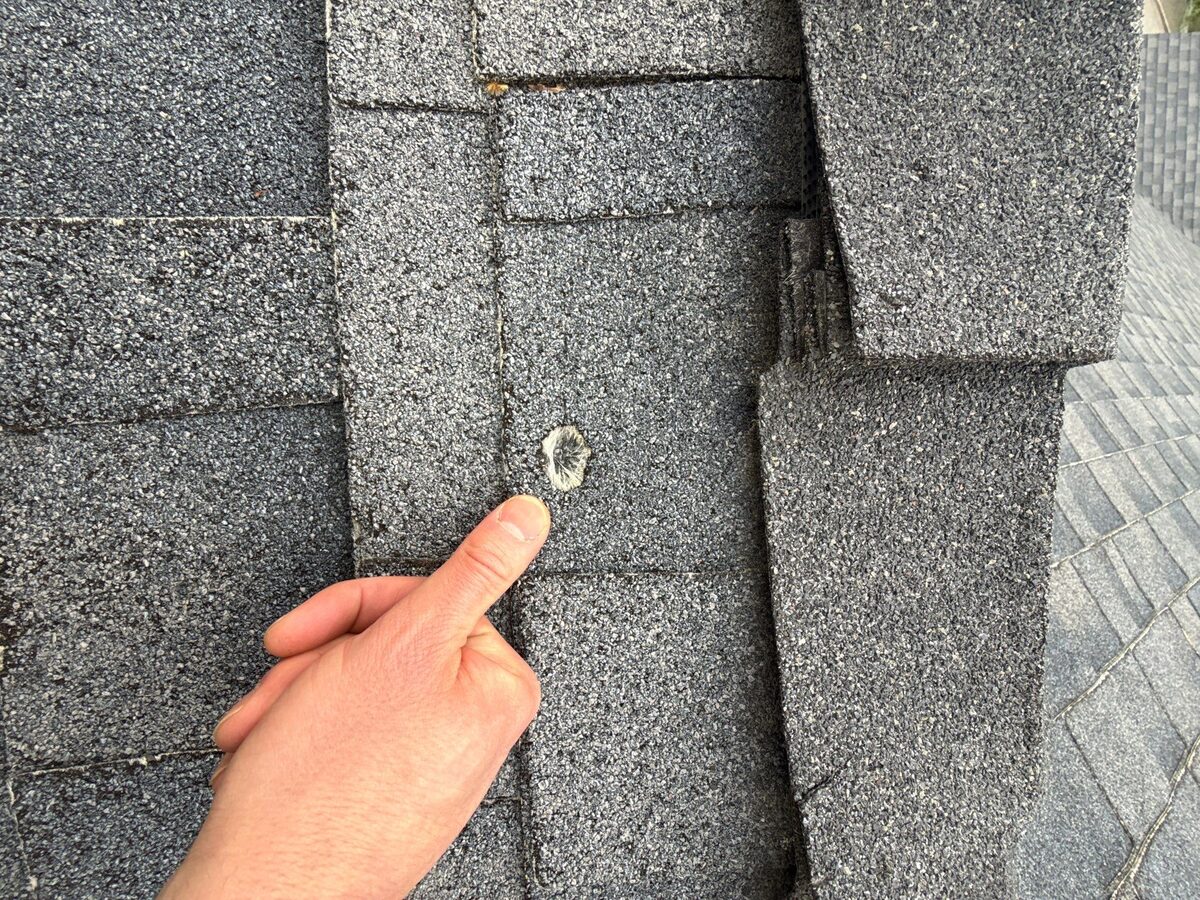
Hail leaves a signature pattern: circular bruises, clustered granule loss, and in heavier hits, exposed fiberglass mat. Adjusters look for this exact pattern when scoping a claim.
One catch: some Idaho and Washington carriers have started carving out "cosmetic-only" hail exclusions, especially on metal roofs. They will pay for functional damage but not for dents that do not affect performance. Read your declarations page or call your agent if you have a metal roof.
Fallen Trees and Impact Damage
If a tree, branch, or wind-blown object hits your roof and causes damage, that is covered. Standard policies treat impact as a covered peril regardless of who owns the tree. Most policies also include a debris removal sublimit (often a few hundred to a thousand dollars) to help with the tree itself, separate from the roof repair. This is one of the cleaner claims to file because the cause is obvious in the photos.
Fire, Lightning, and Sudden Water Events
Fire and lightning are covered perils on every standard policy. Sudden water damage from a covered event (a tree puncturing the roof, ice from a storm, wind-driven rain through a damaged section) is also typically covered. What is not covered is slow water damage from a leak the homeowner knew about and did not fix. That gets classified as neglect, not a sudden loss.
Wind is the #1 trigger here. If you wake up to shingles in the yard, debris on the roof, or a branch down, do not call the insurance company first. Call a roofer. A professional inspection before the adjuster arrives is the single biggest difference between a partial payout and a full replacement.
What Homeowners Insurance Will Not Cover
This is the other half of the question, and it is the half most homeowners get blindsided by.
Normal Wear and Tear
A roof that has reached the end of its service life is not an insurance claim. Asphalt shingles last 20 to 30 years in North Idaho depending on the product, install quality, and exposure. When granules wear off, shingles curl, and the field gets brittle, that is wear and tear, and it is the homeowner's responsibility to replace. If you file a claim on a 28-year-old roof with no storm event behind it, the carrier will deny.
Pre-Existing Damage and Deferred Maintenance
If the roof had damage before the storm and the carrier can prove it, the claim gets reduced or denied. This is why aerial imagery matters more than ever. Carriers use satellite tools that pull historical roof imagery, and they will pull a photo of your roof from two years ago and compare it to the post-storm photo. Damage that was already visible does not get newly covered.
The same goes for deferred maintenance. Missing pipe boot collars, separated flashing, cracked sealant around penetrations: if any of that caused a leak, it is on the homeowner. A storm has to actually cause the damage. It cannot just be the moment the homeowner happened to file.
Cosmetic-Only Damage
Some policies (and this is growing) carve out cosmetic damage. Hail bruises on the metal that do not affect function. Scratches. Surface dings. The carrier will pay for damage that compromises the roof's job (keeping water out), but not for damage that only affects how it looks.
Roofs Past a Certain Age
This is the one that surprises people the most. Some carriers have started limiting coverage on roofs over a certain age (often 15 to 20 years) by switching the payout from RCV (replacement cost) to ACV (actual cash value). Your roof might still be "covered," but the check you get covers the depreciated value of the old roof, not a new one. We have seen homeowners get hit with this and have no idea it was in their policy until the adjuster wrote it up.
ACV vs RCV: How Your Policy Actually Pays Out
This is the most important piece of fine print on your policy, and most homeowners never read it.
- RCV (Replacement Cost Value). The carrier pays the full cost to replace the roof with new, like-kind materials, minus your deductible. You usually receive the depreciated value first, then the rest after the work is complete and you submit invoices.
- ACV (Actual Cash Value). The carrier pays the depreciated value of the roof. On a 20-year-old asphalt roof, that can be a fraction of the replacement cost. You pay the difference out of pocket.
Some carriers default new policies to RCV but downgrade to ACV automatically once the roof passes a certain age. Others let you choose at policy bind. Check the declarations page on your policy for the words "Replacement Cost" or "Actual Cash Value" next to the dwelling coverage. If it says ACV on the roof specifically, ask your agent what it would take to upgrade.
Not sure if your roof has the damage to qualify? We do free, no-pressure inspections across North Idaho and walk you through what we find before you ever call your carrier.
Schedule a Free InspectionWhat Homeowners Should Watch Out For
The claim process is straightforward when everyone plays it straight. It is not always straight. Here is what to watch for.
Storm Chasers Offering to Cover Your Deductible
After every wind event in North Idaho, out-of-state trucks roll into town. Door-to-door pitches, fast contracts, promises to "cover your deductible" or "waive it" so the job feels free. Walk away. Covering a deductible is insurance fraud, and the way contractors actually pay for it is by inflating the claim. When the carrier catches it (and they often do), the homeowner is the one on the hook, not the contractor who has already moved three states away.
Waiting Too Long to File
Most policies require you to file a claim within one to two years of the date of loss. Waiting weeks or months gives the carrier a reason to argue the damage was not from the storm you are citing. If a wind event hits and you suspect damage, get a roofer up there the same week. The clock starts the day the storm happens, not the day you notice the leak.
Cleaning Up Before Documenting
That branch in the yard, the shingles on the lawn, the dented downspout: those are evidence. Photograph everything before you touch it. Date and time stamps matter. Wide shots of the whole house plus close-ups of each piece of damage. Once it is in the trash, it is no longer in the claim.
Letting the Adjuster Set the Scope on Their Own
The adjuster works for the carrier. They are generally fair, but they see dozens of roofs a week and they can miss things. If your roofer found wind damage on a slope the adjuster did not include, your contractor can submit a supplement (a formal request to add items to the scope, with photos and measurements backing it up). This is normal and it happens on the majority of storm claims. The full process is broken down in our claims walkthrough.
How to Know If Your Situation Qualifies Before You Call
Run through this quick check before you pick up the phone.
- Is there a recent storm event you can point to? A wind event, a hailstorm, a fallen tree, a fire. Specific date, specific weather.
- Is the damage visible or has a roofer documented it? Lifted shingles, missing shingles, exposed underlayment, flashing pulled away, debris impact, granules in the gutter.
- Is the roof in reasonable condition for its age? A roof under 15 years old has a much smoother path. A 25-year-old roof can still be approved but needs strong documentation that the storm caused the damage, not aging.
- Does your policy pay RCV or ACV on the roof? Check the declarations page. This decides what you actually receive.
- Have you had any prior denied claims on this roof? If yes, expect more scrutiny on this one.
If you can answer yes to the first two and your roof is in reasonable condition, you have a real claim. Get a roofer up there to document everything, then call the carrier with the inspection in hand. If you are not sure, we will come out, walk the roof, and tell you straight whether we see enough damage to justify filing. We will tell you no if the answer is no. It saves you and us both time.
Frequently Asked Questions
Does homeowners insurance cover a full roof replacement?
Yes, when the damage is caused by a sudden, covered event such as a windstorm, hail, fire, or a fallen tree. Insurance does not cover roofs that have aged out, worn down, or been damaged by deferred maintenance. In North Idaho, wind is the most common trigger for an approved claim.
What kind of roof damage will insurance not cover?
Normal wear and tear, pre-existing damage, neglect, and most cosmetic-only damage are not covered. Some policies also exclude roofs over a certain age, or pay actual cash value (ACV) instead of full replacement cost (RCV) once the roof passes a threshold.
What is the difference between ACV and RCV on a roof claim?
RCV pays the full cost to replace the roof with new materials, minus your deductible. ACV pays the depreciated value, which can be a fraction of the replacement cost on an older roof. Check your declarations page before you assume the carrier will cover a full new roof.
Should I call my insurance company or a roofer first after storm damage?
Call a roofer first. A professional inspection documents the damage with photos and measurements before the adjuster arrives, so you walk into the claim with evidence rather than guesses. Filing without an inspection often leaves money and scope on the table.
How long after a storm do I have to file a roof damage claim?
Most homeowners policies require you to file within one to two years of the date of loss, but waiting weeks or months can give the carrier reason to deny the claim. If you suspect storm damage, document it the same week and get a roofer on the roof before the next storm complicates the timeline.
The Honest Version
We are a newer company in North Idaho, still building our name in Hayden and Coeur d'Alene. That means a few things. We do not knock on doors after a windstorm. We do not pressure homeowners into contracts before the adjuster has been out. We do not offer to cover deductibles. We do a real inspection, we tell you what we see, and we let the carrier do the rest. If the damage qualifies, we help you get a full roof replacement through the claim. If it does not, we will tell you that too.
If you think a recent storm caught your roof and you want a straight answer before you call your carrier, start with the satellite calculator for a 60-second look at your roof, or schedule a free inspection and we will walk it with you. Same straight answer we would give our own family.