A licensed, insured roofer costs more upfront than the cheapest bid, and it is almost always the better spend. The low quote wins the day you sign it. The corner that made it cheap wins about a year later, when the shortcut starts letting water into your house. The price gap between a real roofer and the cheapest option is not markup. It is the flashing, the insurance, the warranty, and the workmanship that do not show up in a photo of a finished roof but decide whether it lasts.
We see the other side of this every week across Hayden, Coeur d'Alene, and Post Falls: a homeowner saved a few hundred dollars on an install, then paid us several times that to fix what the cheap crew left behind. Further down is a real example, a roof vent that a previous installer screwed straight through the shingles. Here is what you are actually paying for with a licensed roofer, and what the lowest bid quietly leaves out.
What You Are Actually Paying For With a Licensed Roofer
When one quote is real money and another is suspiciously cheap, the difference is rarely greed. It is scope. A licensed roofer's price covers things you cannot see from the driveway.
- State registration you can verify. Idaho requires roofing contractors to register with the state through the Idaho Contractors Board (DOPL), and Washington requires registration with Labor and Industries. A real contractor has a number you can look up.
- Insurance that protects you. Liability coverage for damage to your home and workers' comp for the crew on your roof. Without it, an injury or a mistake can land on you, the homeowner.
- Proper detail work. Flashing, underlayment, and ventilation done right. This is where corners get cut, because it is the part a homeowner cannot easily check.
- A written workmanship warranty. If something the crew installed fails, they come back. That promise is only worth something if the company is still around and stands behind it.
- Code-compliant installation. Permits where required, and an install that would pass an inspection rather than one that just looks finished.
None of that is glamorous, and none of it photographs well. It is also the entire reason a roof keeps water out for 25 years instead of 25 months. A proper roof repair or replacement is mostly the details you never see.
What the Cheapest Bid Usually Means
A bid that comes in far below the rest is not a better deal on the same work. It is a different, smaller scope, and the gap is made up of the things that got left out.
- No permit and no inspection. Nothing forces the work to meet code, and there is no paper trail if it goes wrong.
- No insurance. The savings often come straight out of the policy the homeowner is now carrying the risk for.
- Cheaper materials and skipped steps. Thin underlayment, reused flashing, or caulk where a flashing detail belongs.
- Cash, and gone. An unlicensed crew paid in cash has no reason to come back when the work fails, and often no way to be reached.
The low number is real. So is the work that is missing from it, and that missing work is exactly what keeps water out of your attic.
A Roof Vent Screwed Straight Through the Shingles
Here is a job that shows the difference better than any explanation. A homeowner had a new vent pipe added to their roof. Whoever did it cut the hole, set the pipe, and ran screws straight through it to hold the flashing down, then smeared a bead of caulk around the base to seal it. Nobody laid the shingles back correctly around it. From the ground it looked done. It was not.
Caulk is not flashing. On a roof, water runs downhill and the shingles are layered so each one sheds onto the one below it. The shingles have to be laid correctly around anything that pokes through so the roof carries water down and around it. When you skip that, screw straight through instead, and rely on caulk, you have created holes above the waterline and asked a bead of sealant to plug them. In North Idaho, one season of sun and freeze-thaw dries the caulk out, it cracks, and water runs through those screw holes into the decking and down into the ceiling.
The fix is not another bead of caulk. We pulled the surrounding shingles, set the flashing, and laid the shingles back correctly around the pipe so the roof itself directs water around it. No screws straight through, no caulk doing a job it was never meant to do. That is the difference between a repair that holds and one that buys you a few months.
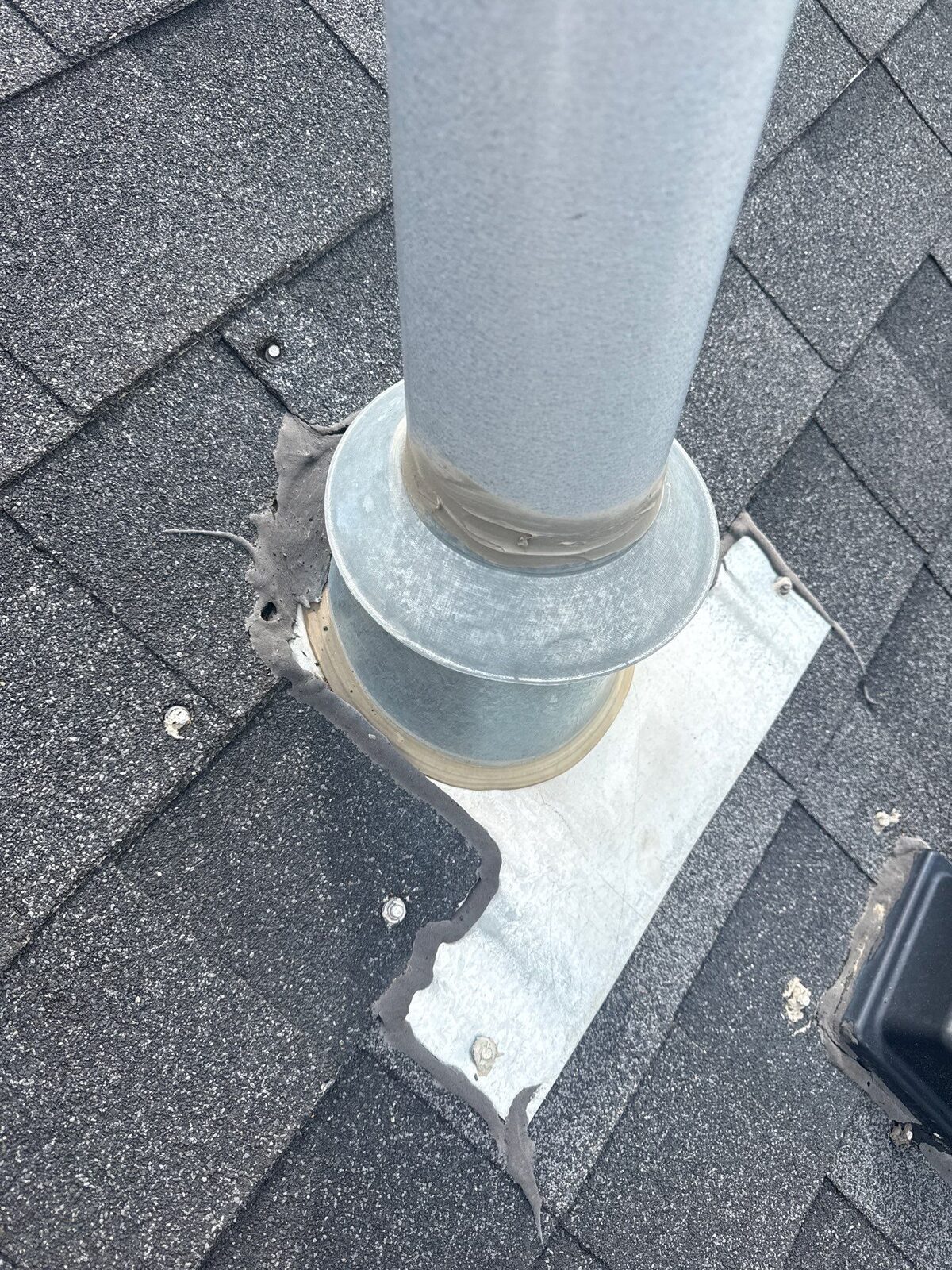
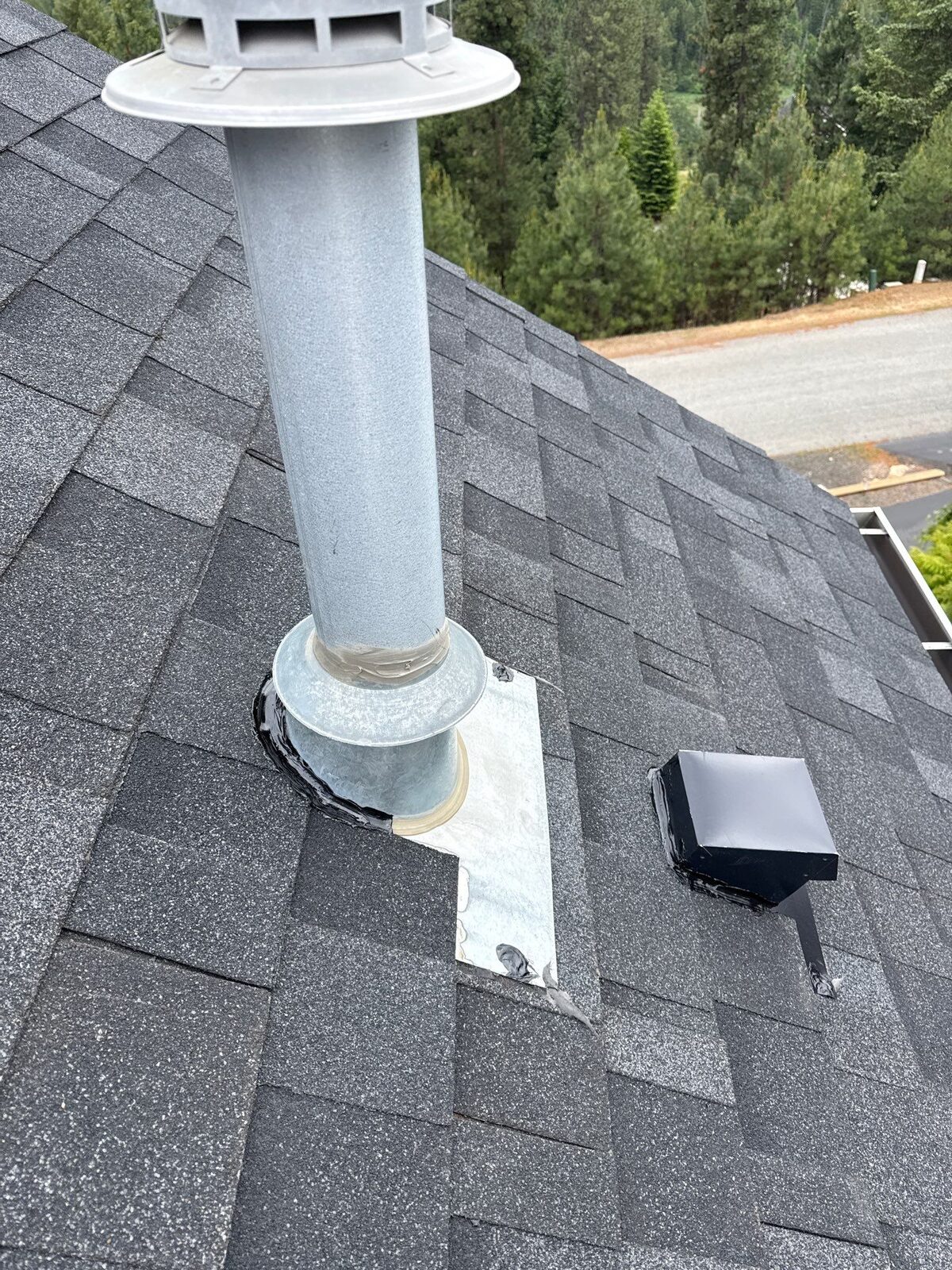
Caulk is not flashing. Any time water is being held back by a bead of sealant instead of the way the roof is layered, it is a question of when it leaks, not if. A penetration done right has the shingles laid correctly around it so the roof sheds water around it on its own.
The Hidden Cost of the Cheapest Bid
The leak is just the opening bill. By the time water shows up on a ceiling, it has usually been running into the decking and insulation for a while. Now you are paying for the original cheap job, the water damage it caused, and the proper repair on top. The math almost never favors the low bid once it goes wrong.
There are quieter costs too. A manufacturer's shingle warranty can be voided by an improper install, so the coverage you thought you had disappears. Unlicensed or unpermitted work can complicate a future insurance claim or a home sale, where an inspector flags it and the buyer wants it corrected. You often end up hiring the licensed roofer in the end anyway, just after paying for the damage first. If you want to sanity-check a number, run your address through our instant roof estimate so you know what a real replacement costs before you judge a quote that looks too good.
Licensed Pro vs the Cheapest Bid at a Glance
The two quotes can look similar on paper. Here is what actually separates them.
| What you are comparing | Licensed, insured roofer | The cheapest bid |
|---|---|---|
| State registration | Registered and verifiable (ID DOPL / WA L&I) | Often unregistered or unverifiable |
| Insurance | Liability and workers' comp, proof on request | None, so the risk falls on you |
| Flashing and detail work | Flashing woven into the roof | Caulk and screws through the shingles |
| Materials | Spec'd, warrantied materials | Cheapest available, corners cut |
| Workmanship warranty | Written and honored | None, or a handshake |
| Permit and code | Pulled and inspected where required | Skipped |
| When it leaks | They come back and fix it | Unreachable |
Already had work done and not sure it was done right? We will come out, walk the roof, and tell you straight what we find. No pressure, no scare tactics.
Get a Free InspectionHow to Tell If a Roofer Is Actually Licensed and Insured
You do not have to take anyone's word for it. Before you sign anything, run through this.
- Ask for the registration number. Idaho contractor registration or a Washington L and I number, then look it up on the state website. It takes two minutes.
- Get a certificate of insurance. Ask for current liability and workers' comp, and call the insurer to confirm the policy is active, not expired.
- Get the scope and warranty in writing. What materials, what flashing details, and what happens if it fails. Vague quotes hide cut corners.
- Check that they are local and reachable. A company with a real address and reviews in North Idaho is one you can find again when you need them.
A real contractor hands all of this over without hesitation. Hesitation is the answer. For a full walkthrough of vetting a roofer, see our guide on how to find a roofing company near you, and if you want a second set of eyes on work that was already done, a professional inspection will tell you where you stand.
Frequently Asked Questions
Is it worth paying more for a licensed roofer?
Almost always, yes. A licensed, insured roofer costs more upfront than the cheapest bid, but the price covers proper flashing and detail work, liability and workers' comp insurance, a workmanship warranty, and code-compliant installation. The cheapest bid usually saves money by skipping those, and the cut corner shows up as a leak within a season or two.
Do roofers have to be licensed in Idaho?
Idaho requires roofing contractors to register with the state through the Idaho Contractors Board (DOPL), and Washington requires registration with Labor and Industries. Registration is not the same as proving skill, so you should also confirm the roofer carries liability insurance and workers' comp, and ask for proof of both before any work starts.
Why is one roofing quote so much cheaper than the others?
A quote that comes in far below the rest is usually leaving something out: no permit, no insurance, cheaper materials, or skipped steps like proper flashing and underlayment. Sometimes it is an unlicensed crew working for cash. The low number is real, but so is the work that is missing from it, and that missing work is what keeps water out.
What goes wrong when a roof vent or pipe is installed cheaply?
The common shortcut is screwing the vent or pipe flashing straight through the face of the shingles and sealing it with a bead of caulk. Caulk is not flashing. It dries out, cracks, and lets water run under the shingles within a season. A proper install means lifting the surrounding shingles, setting a flashing base that water sheds over, and weaving the shingles back on top so the roof itself directs water away from the penetration.
How do I check that a roofer is actually licensed and insured?
Ask for their Idaho contractor registration number (or Washington L and I number) and a current certificate of insurance, then verify the registration on the state website and call the insurer to confirm the policy is active. A real contractor hands these over without hesitation. Hesitation or excuses are the answer.
The Honest Version
Being licensed and insured in both Idaho and Washington is the baseline for us, not a selling point. You can look us up: Idaho registration #1671868 and Washington #ELEVARP744B8. We would rather lose a bid to a lower number than win it by skipping the flashing that keeps your house dry. We fix a lot of cheap work around North Idaho, and we would rather do it right the first time.
If you got a quote that seems too good, or you are not sure the work you already paid for was done right, schedule a free inspection and we will walk the roof with you. We will tell you the same thing we would tell our own family.