Repair your roof when it is relatively young, the damage is localized, and the shingles still have years of life left. Replace it when the roof is near the end of its lifespan, the wear runs across the whole surface, or you keep stacking up one repair after another. The deciding factor is not the leak in front of you. It is how much life the shingles actually have left. In North Idaho, where wind is the main thing that beats up a roof, that one distinction separates a few-hundred-dollar fix from a full reroof.
We see both ends of this every week across Hayden, Coeur d'Alene, and Post Falls. A four-year-old roof with shingles torn off by wind is almost always a repair. A twenty-five-year-old roof that is curling and shedding granules everywhere is almost always a replacement. The hard calls live in the middle, and that is where a real look at the roof matters. Here is the framework we use, and two actual jobs that show the difference.
How to Tell If Your Roof Can Be Repaired or Needs Replacing
Four things decide it. Walk through them in order and the answer usually becomes obvious.
- Remaining shingle life. How old is the roof, and how much life is left in the field of shingles. This is the biggest factor by far.
- Damage type and how widespread it is. One slope hit by wind is different from wear spread across every face of the roof.
- Whether it is an insurance situation. A sudden covered event can change the math, since the carrier may pay for a replacement you would otherwise pay for yourself.
- Cost-to-repair ratio. What the repair costs compared to a full replacement, and whether you keep paying for the same roof over and over.
None of these stands alone. A young roof with a small leak is an easy repair. An old roof with the same small leak is a warning the rest is not far behind. Same symptom, opposite call, because the remaining life is different.
How Much Life Do Your Shingles Actually Have Left?
Most architectural asphalt shingles last 20 to 30 years in North Idaho, depending on the product, the quality of the install, and how much sun and wind the roof takes. That number is the anchor for the whole decision. A roof with most of its life left is worth saving. A roof at the end of its life is throwing good money after bad with every patch.
You do not need to climb up to get a rough read. Granules collecting in the gutters, shingles that curl or cup at the edges, cracking across the field, and bald spots where the black fiberglass mat shows through all point to a roof running out of time. A few of those signs in one small area is a repair. Those signs across the whole roof mean the clock has run out.
Here is where it gets counterintuitive. A roof can be young and still lose shingles, and that is usually a repair, not a replacement. The repair below is a good example. This roof was only a few years old. The shingles did not wear out and the material did not fail. The original install was bad: shingles were not sealed or nailed correctly, so when a North Idaho windstorm came through, the wind got underneath them and tore a section clean off. The fix was to correct the install and replace the damaged section, not tear off a roof that still had two decades of life in it.
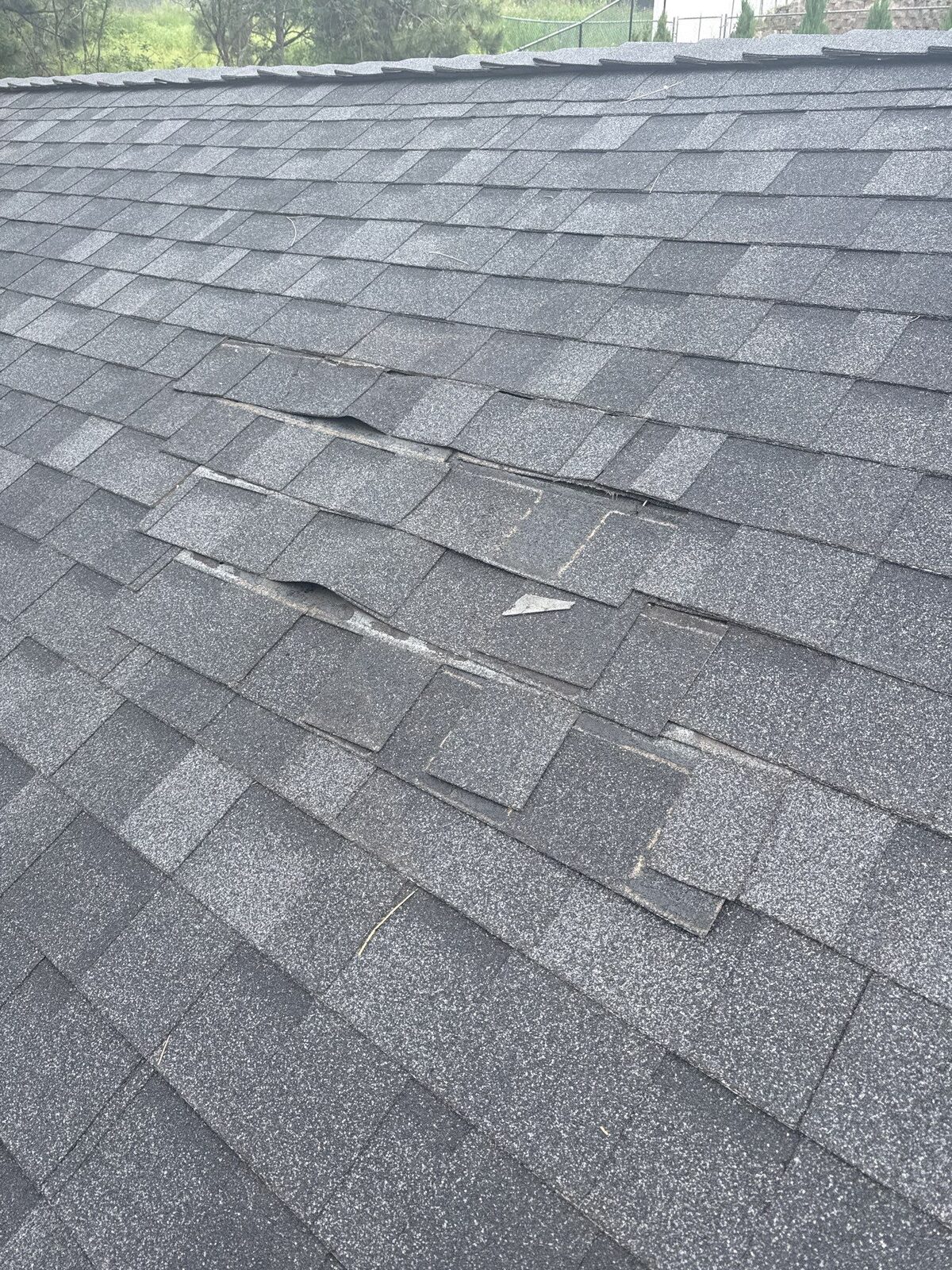
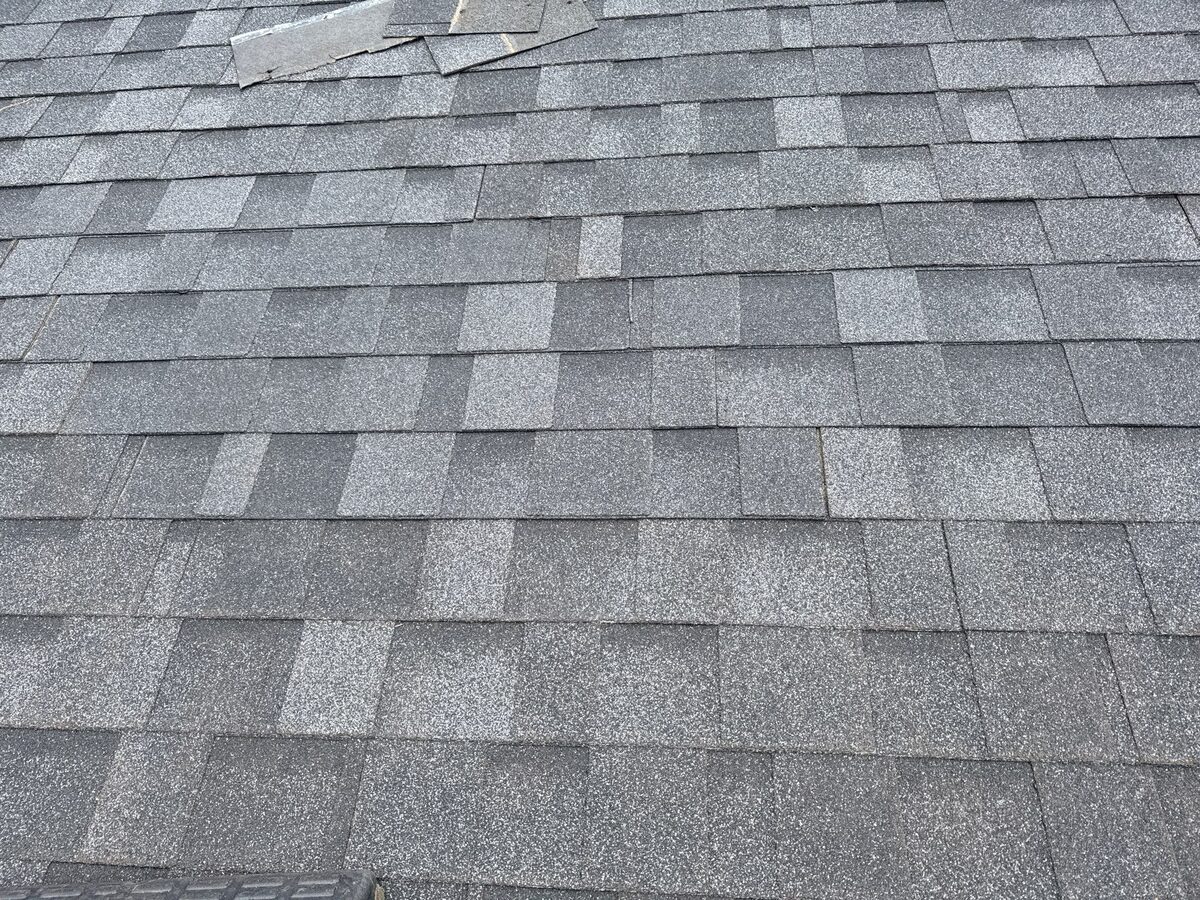
Young roof, bad install, wind damage: almost always a repair. The material still has years left. You are fixing a workmanship problem and one damaged section, not replacing a roof that failed. Tearing it off would waste most of its remaining life.
What Kind of Damage Is It, and How Widespread?
The second question is whether the damage is contained or systemic. Localized damage on an otherwise sound roof is a repair. A missing section from wind, a leak around a skylight or a pipe boot, a few shingles knocked loose by a branch. You fix the spot, the rest of the roof keeps doing its job.
Systemic damage is the opposite. When the whole surface is worn, brittle, and shedding, the problem is not one spot. It is the whole roof aging out at once. Patching a leak on a roof like this just moves the next leak a few feet over, because every shingle is at the same point in its life. That is the roof below. It is not storm damage. It is age. As you can see from the picture below, this roof has lost most of its granules and the fiberglass is now being exposed, and a few shingles have blown off entirely. This roof is shot, and the honest answer is a full replacement, not another repair.
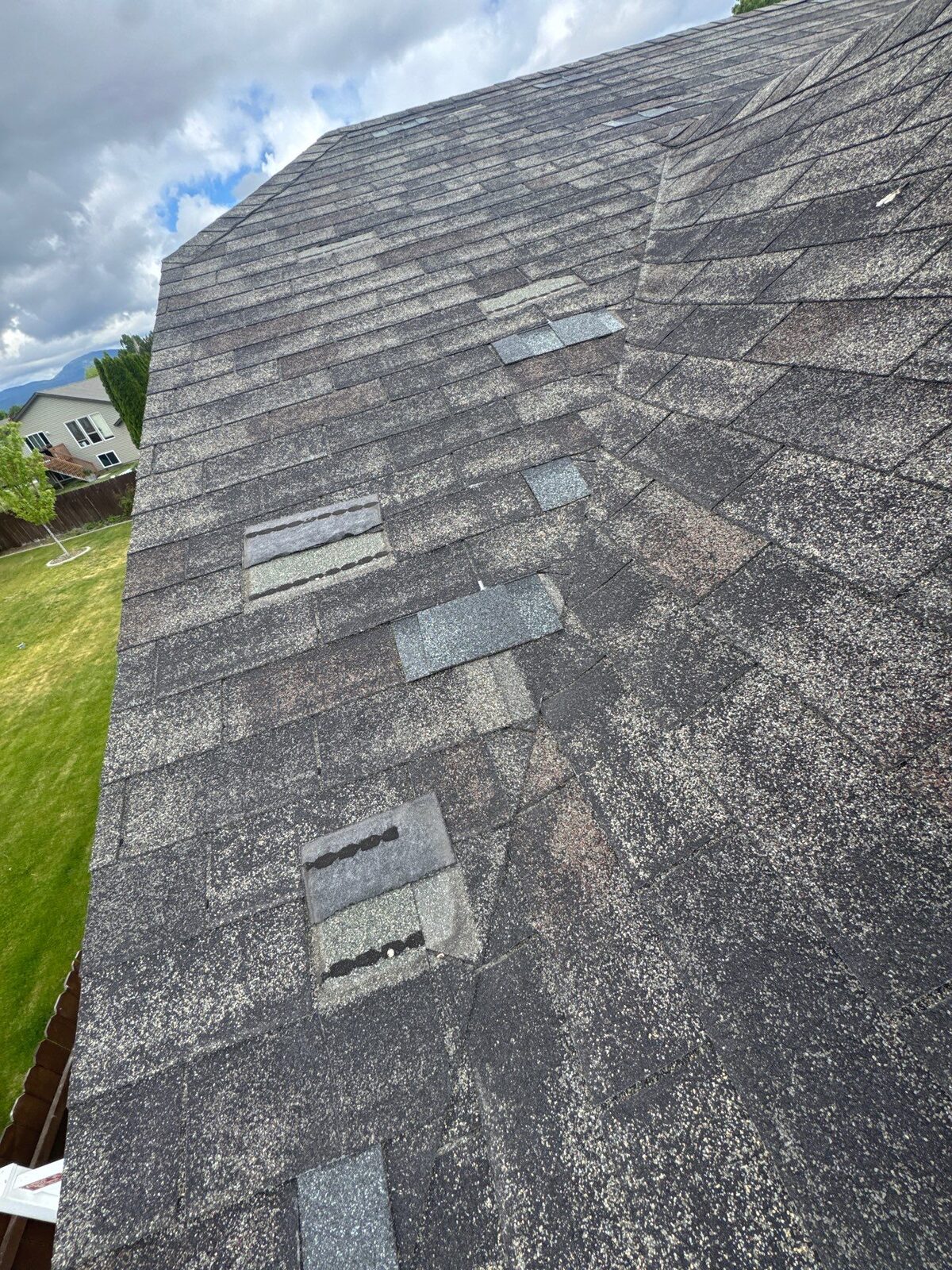
Granule loss across the entire roof, with the fiberglass mat starting to show through. On a roof this worn, fixing one spot just moves the next leak a few feet over.
A quick way to think about it: if you can draw a circle around the damage, it is probably a repair. If the damage is everywhere you look, it is probably a replacement. When you replace, the material you choose matters for how long the next roof lasts, which is worth a look at our materials comparison before you commit.
Is It an Insurance Situation?
This one can flip the decision. If the damage came from a sudden, covered event like wind, hail, or a fallen tree, your homeowners policy may pay for a replacement that you would otherwise be on the hook for. Wind is the most common trigger in North Idaho, and it is exactly the kind of damage that can total an older roof in one night.
Wear and tear is never covered. A roof that simply aged out is the homeowner's bill, not the carrier's. So the insurance question only changes things when there is a real event behind the damage. We break the whole coverage picture down in does homeowners insurance cover roof replacement, and if you think a storm caught your roof, get a professional inspection before you call your carrier. Walking into a claim with documented damage is the difference between a partial payout and a full storm and insurance replacement.
The Cost-to-Repair Ratio: When Repairs Stop Making Sense
The last factor is money, and it is simpler than people expect. Compare what the repair costs to what a full replacement costs. A repair that is a small share of a new roof on a roof with plenty of life left is an easy yes. A repair that climbs toward a large chunk of replacement cost, on a roof that is already old, is a hard no. At that point you are spending real money to extend a roof that is going to need replacing soon anyway.
The other half of the ratio is repetition. If this is the first real fix on a sound roof, repair it. If you are calling someone out every year to chase a new leak, the repairs have quietly added up to more than a replacement would have cost, and you still have the old roof. That is the trap. To see where your roof actually lands, run your address through our instant roof estimate for a replacement number, then weigh the repair against it. For a deeper breakdown, our roof replacement cost guide walks through what drives the price in North Idaho.
Repair vs Replace at a Glance
Line your roof up against this and the lean usually shows itself.
| What you are looking at | Lean toward repair | Lean toward replacement |
|---|---|---|
| Roof age | Under about 15 years | Past 20 years or near the end of its rated life |
| Shingle condition | Still flexible, granules intact | Brittle, cracking, widespread granule loss |
| Damage spread | One slope or a defined section | Across the whole roof |
| What caused it | A storm or a bad install on an otherwise good roof | Age and wear, no single event |
| Repair history | First real fix | You keep patching the same roof |
| Cost to repair | A small share of a full replacement | Approaching what a new roof costs |
Not sure which side of the line your roof is on? We will come out, walk it, and tell you straight whether a repair holds or it is time to replace. No pressure either way.
Get a Free Second OpinionFrequently Asked Questions
Should I repair or replace my roof?
Repair if the roof is relatively young, the damage is localized, and the shingles still have years of life left. Replace if the roof is near the end of its lifespan, the wear is spread across the whole surface, or you are stacking up repeated repairs. The age and remaining life of the shingles is the single biggest factor.
How long do asphalt shingles actually last in North Idaho?
Most architectural asphalt shingles last 20 to 30 years in North Idaho, depending on the product, the quality of the install, and how much sun and wind the roof takes. A roof under 15 years old with localized damage is usually a repair. A roof past 20 years with widespread wear is usually a replacement.
Is a newer roof with wind damage worth repairing?
Often yes. If a roof is only a few years old and the shingles tore off because of a bad install, not because the roofing material failed, a proper repair restores it and you keep the remaining 20-plus years of life. The fix is correcting the install and replacing the damaged section, not tearing off a roof that still has most of its life.
When is repairing a roof a waste of money?
When the roof is old and worn across the whole surface. If shingles are brittle, granules are gone, and you are patching one leak after another, each repair is good money after bad. Once the cost of repairs starts approaching a large share of a full replacement, or you are repairing the same roof every year, replacement is the better spend.
How do I know how much life my shingles have left?
Look at granule loss in the gutters, curling or cupping shingles, cracking, and bald spots where the fiberglass mat shows through. Widespread signs across the whole roof point to end of life. A roofer can tell you on a free inspection whether the field still has flexibility and life, or whether it has gone brittle and shot.
The Honest Version
We are a newer company in North Idaho, still building our name in Hayden, Coeur d'Alene, and Post Falls. That shapes how we answer this question. We do not talk anyone into a replacement they do not need, and we do not slap a patch on a roof that is going to leak again next month just to take the job. If your roof has life left and the damage is contained, we will tell you to repair it. If it is shot, we will tell you that too, and show you the shingles to prove it.
If you want a straight answer on whether to repair or replace, start with the instant roof estimate for a 60-second look at your roof, or schedule a free inspection and we will walk it with you. Same straight answer we would give our own family.