This is the most common question we get. Somebody calls, says they need a new roof, and within the first two minutes they ask: "Should I go shingles or metal?" The honest answer is that it depends on your house, your budget, and how long you plan to stay. There is no one right answer for everybody. Both are solid choices for North Idaho. We just need to figure out which one is the right choice for you.
We are going to walk through everything here. Lifespan, how each one handles our winters, insurance, resale value, and when each option makes the most sense. We also have a materials comparison page where you can see all three of our roofing options side by side, including Brava composite cedar shake. By the end you should have a pretty clear picture of where you land.
Architectural Shingles: The Workhorse
Architectural shingles are what you see on most homes in Coeur d'Alene, Hayden, and Post Falls. They are also called dimensional shingles or laminated shingles. The name comes from their layered design. Instead of lying flat like old three-tab shingles, they have a thicker, textured look that gives the roof more depth. They look good. And they work well.
We install CertainTeed Landmark Pro as our go-to shingle. It carries a Class A fire rating, handles winds up to 110 mph, and comes with a Class 4 impact resistance rating when you go with the right underlayment system. That matters here because North Idaho gets hail, and it gets wind. The Landmark Pro holds up.
The exact cost depends on your roof's size, pitch, and complexity. Every roof is different, so rather than throwing out generic numbers, we built a satellite roof calculator where you can input your address, select shingles as the material, and get a realistic estimate tailored to your specific home. You can also compare all three of our material options side by side on our materials page.
Lifespan on architectural shingles is 25 to 30 years. Some manufacturers will print "lifetime warranty" on the packaging, and technically that is true, but the actual performance life is closer to that 25 to 30 year window here in North Idaho. Our freeze and thaw cycles, heavy snow, and UV exposure in summer all take their toll. That is not a knock on shingles. That is just reality in this climate.
One thing shingles have going for them is that they are easy to repair. If a branch falls and damages a section, or a few shingles blow off in a windstorm, a roofer can patch that area without touching the rest of the roof. That is simple and cheap. With metal, repairs can be more involved.
Color options are another plus. Landmark Pro comes in over a dozen colors, so you can match your siding, your stone work, whatever you need. That matters if you are in a neighborhood with an HOA or if you just care about curb appeal.
Metal Roofing: The Long Game
Metal roofing is a different animal. We install standing seam panels from Metal America, which is a system where the panels lock together at raised seams. No exposed fasteners. That is important because exposed fasteners are the number one failure point on cheaper metal roofs. Standing seam eliminates that problem.
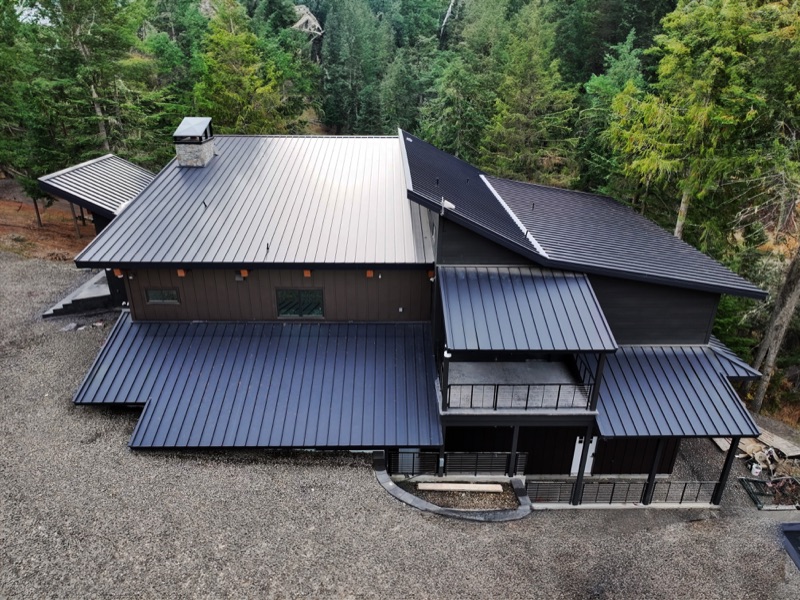
Standing seam metal roof on a home in Hayden, Idaho
The cost is higher upfront. We are not going to sugarcoat that. Metal costs more than shingles. The question is whether the long term math works out in your favor. You can compare both options on your specific roof using our satellite calculator.
And often it does. A standing seam metal roof lasts 40 to 60 years, and some last even longer. So while you might replace a shingle roof twice in that span, the metal roof is still going. When you do that math over the life of the home, metal can actually be the cheaper option. It depends on how long you plan to own the house.
Snow, Ice, and Fire
North Idaho gets real winters. We are talking 60 to 80 inches of snow in a normal year, more up toward Sandpoint and the higher elevations. Metal roofs shed snow. The smooth surface lets snow slide off instead of sitting and building up. That reduces the load on your structure. If you have ever seen a shingle roof sagging under three feet of packed snow, you know why that matters.
Ice dams are another issue up here. They form when heat escapes through the roof, melts the snow, and the water refreezes at the eaves. Metal roofs are less prone to ice dam damage because the panels are continuous and water has fewer places to work its way in. Shingles, with their individual overlapping pieces, give ice more opportunity to cause problems. Proper ventilation and insulation matter for both, but metal has an edge on this one.
Then there is fire. If you live anywhere near the wildland urban interface, and a lot of North Idaho qualifies, fire resistance is worth thinking about. Metal is Class A fire rated, meaning it will not ignite from burning embers landing on your roof. Shingles are also Class A rated, but the metal itself is noncombustible. In wildfire zones, that distinction can matter to your insurance carrier.
On energy efficiency: Metal roofs reflect more solar heat than shingles, which can lower your cooling costs in summer. In North Idaho, our summers are getting hotter. A metal roof with a lighter color finish can make a real difference on your July and August electric bills.
What This Means for Your Insurance
This one surprises people. Some insurance carriers offer discounts for metal roofs. The combination of fire resistance, impact resistance, and wind resistance can qualify you for lower rates. We have seen homeowners in our area save enough on their annual premium that it offsets part of the higher upfront cost over time. Not every carrier does this, so call yours and ask before you make a decision based on it. But it is worth a phone call.
Shingle roofs with high impact ratings, like the Landmark Pro with its Class 4 rating, can also qualify for insurance discounts. So this is not exclusively a metal roof advantage. But metal tends to get the bigger discount when it is available.
Resale Value
Both materials add value to your home. A new roof of any kind is one of the highest ROI improvements you can make. Buyers notice it. Home inspectors notice it. Appraisers notice it.
That said, metal tends to be the bigger selling point. Buyers see a metal roof and they think "I will never have to deal with that." A 10 year old metal roof still has 30 to 50 years of life left. A 10 year old shingle roof has 15 to 20. If you are planning to sell in the next few years and want maximum impact on your listing, metal gives you more to talk about. But again, a new shingle roof is still a strong move. Do not let anyone tell you shingles are a bad investment. They are not.
Want to see actual numbers for your roof? Our satellite calculator gives you a ballpark estimate in about 60 seconds. No phone call needed.
Compare Estimates for Your RoofWhen to Pick Shingles
Go with architectural shingles if your budget is the main factor. There is no shame in that. A well installed shingle roof protects your home just fine for 25 to 30 years. If you are not sure how long you will stay in the house, or if you have other big expenses competing for the same money, shingles are the practical call. They look good, they perform well, and they are the most affordable option of the three.
Shingles also make sense if your roof has a lot of complex geometry. Valleys, dormers, hips, skylights. Shingles are easier to work around all of that. Metal can be done on complex roofs, but the labor cost goes up fast with every cut and transition.
When to Pick Metal
Go with metal if you are thinking long term. If this is your forever home, or at least your next 20 plus year home, the math starts to favor metal. You pay more now, but you are done. No reroof in 25 years. No worrying about it. Just done.
Metal is also the move if you are in a high wildfire risk area. Parts of Rathdrum, Athol, and the areas around Hayden Lake and the Spokane River corridor all have elevated fire risk. A noncombustible roof is real peace of mind in August when the smoke rolls in.
And if snow load is a concern, especially on lower pitch roofs or structures where you have had issues with ice dams before, metal handles that better than shingles do.
A Third Option Worth Knowing About
While we are at it, there is a third material option that does not get talked about enough: Brava composite cedar shake. It gives you the look of real cedar without the fire risk or the maintenance. It is in a different price bracket than standard shingles, but if you want that mountain lodge look and Class A fire resistance at the same time, it is worth a look.
Our Honest Take
We install both. We make the same margin either way. So we genuinely do not care which one you pick. We just want you to pick the right one for your situation. If your budget says shingles, we are going to put on the best shingle roof we can. If your situation says metal, we will tell you that. And if you are on the fence, we will walk through the numbers and let you decide.
We are newer. We are building our name in this area right now. The only way we do that is by being straight with people.
If you want to see real numbers for your specific roof, our satellite calculator lets you compare shingles, metal, and Brava side by side. Takes about a minute. Or if you would rather just talk to somebody, give us a call at (208) 551-1359. We will give you the same straight answer we would give our own family.