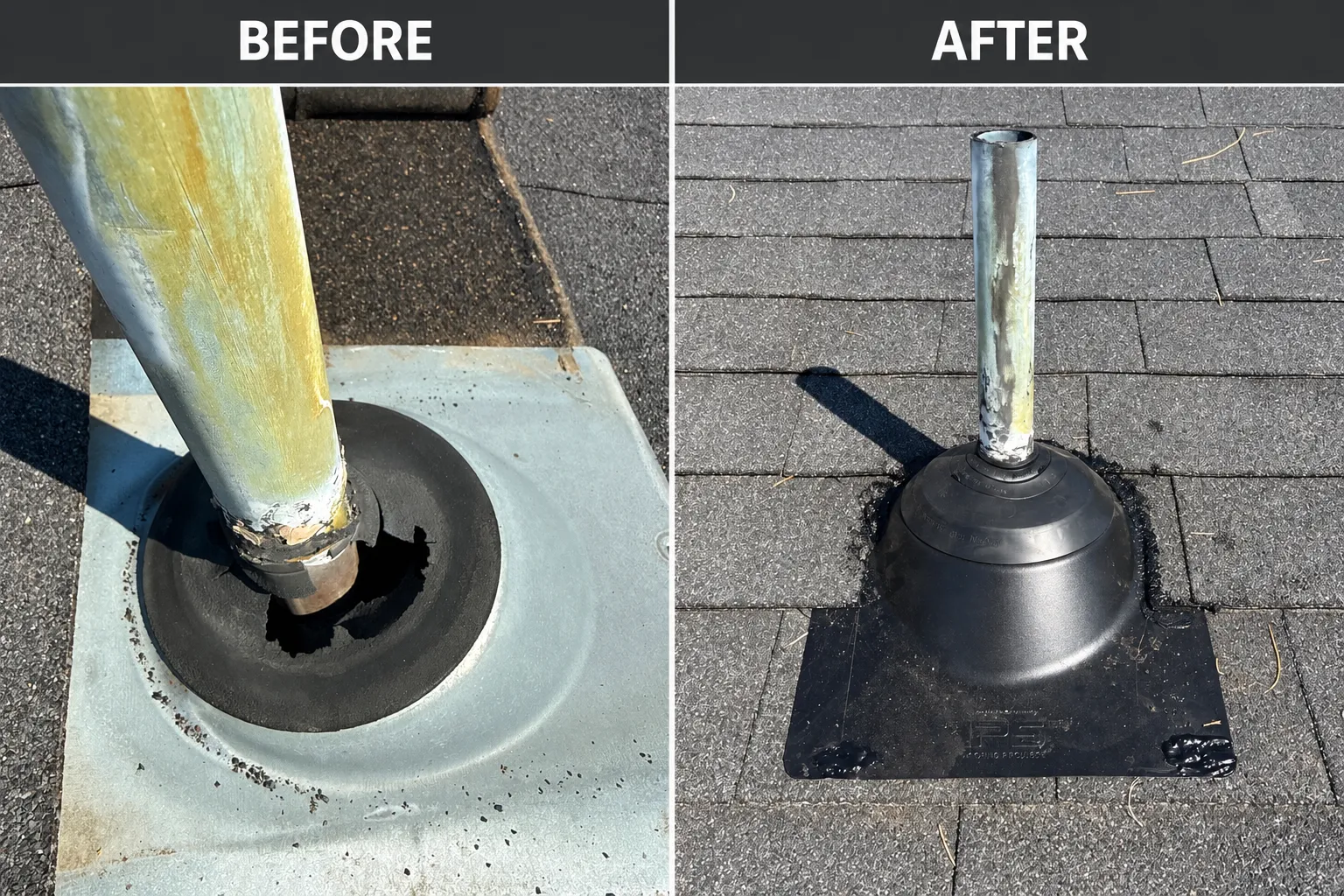
A homeowner called us recently with water showing up inside the house and no idea where it was coming from. From the ground, the roof looked fine. Here is what we found once we got up there.
What we found on this roof
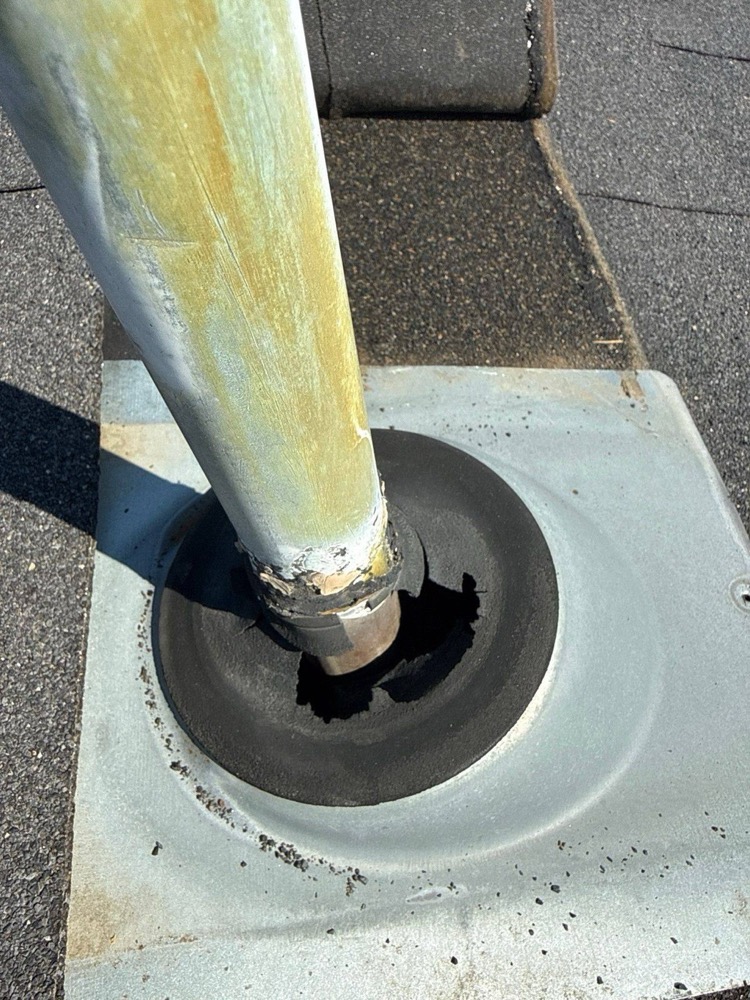
The leak was at the pipe jacks, the fittings that seal the roof around each plumbing vent. The rubber seal on every one of them had deteriorated. On the pipe jack below, the seal has torn away from the pipe and left an open gap around it.
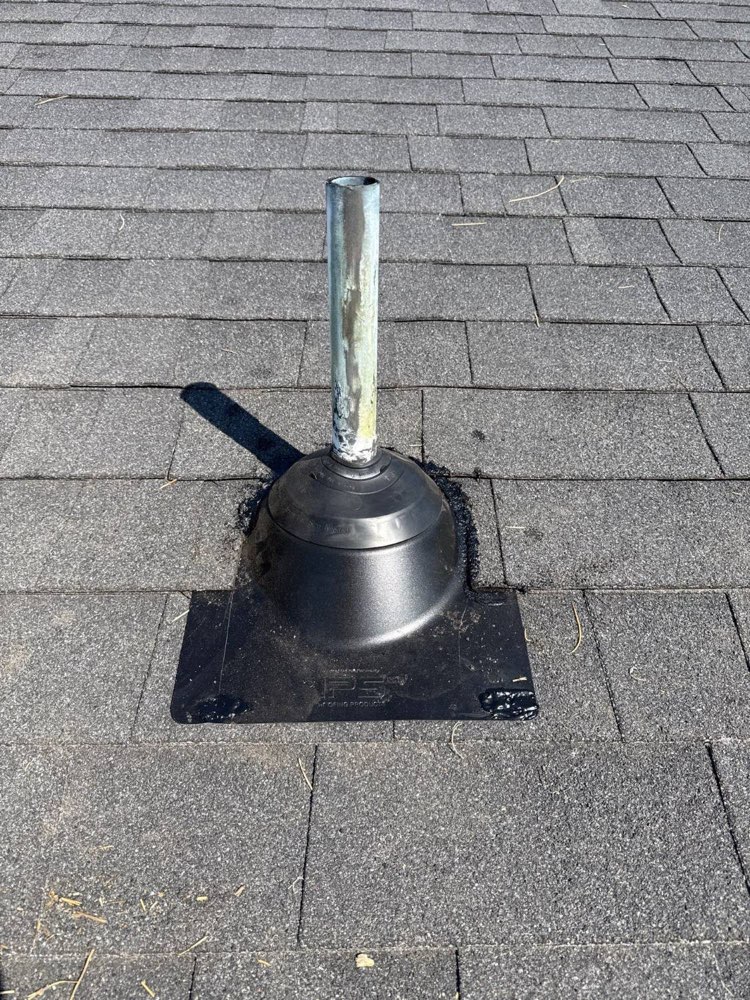
We replaced the pipe jacks with new ones. The rest of the roof did not need any work.
What does a pipe jack do?
The plumbing in your house vents through pipes that come up through the roof. A pipe jack, also called a pipe boot or vent pipe flashing, seals that opening. It is one assembly: a flat base that ties in with the shingles around it, and a rubber seal built into it that fits snug around the pipe, so water runs past instead of following the pipe down.
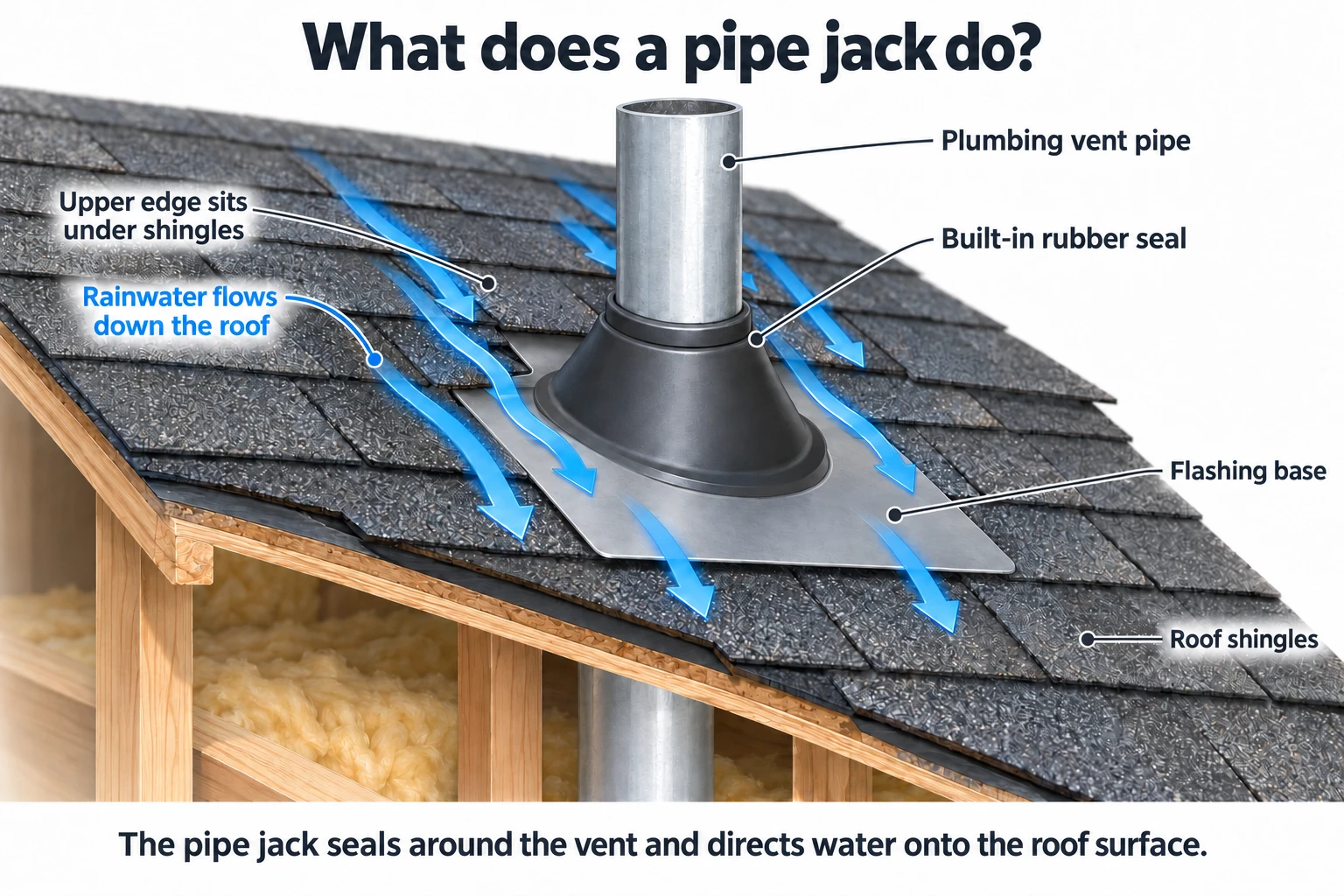
That rubber seal is out in the sun and weather all year. Over time it can dry out, crack, or pull away from the pipe, and once it does, rain and snowmelt can get into the roof.
What are the signs of a pipe jack problem?
Inside the house, the usual first sign is a water stain on a ceiling, often near a bathroom, kitchen or laundry room where vent pipes run. In the attic, look for damp insulation or stained wood around a vent pipe. On the roof, a seal that is cracked, split or gapped, or one covered in heavy sealant from an earlier patch, is worth a closer look.
None of those prove the pipe jack is the cause. Moisture near a vent can also come from attic condensation, a plumbing problem, or a leak somewhere else that runs along the roof deck before it drips. Treat it as a clue, and have the roof inspected so the repair goes where the water is actually getting in.
How we repair a failed pipe jack
When we find a problem at a vent, we inspect the pipe jack, how it ties in with the surrounding shingles, and the condition of the roof around it. When replacement is needed, we install a complete new pipe jack assembly rather than patching the old one. The shingles around it may need to be lifted or addressed so the new one ties in properly, but it is a roof repair, not a roof replacement.
Sealant alone may not reliably address a deteriorated seal, because the rubber underneath keeps breaking down. That is why our approach is to replace the complete assembly when the seal has failed.
If one pipe jack on your roof has failed, the others may be a similar age, so each one should be inspected. On this house every one had the same problem. On another roof it might be just one.
Why does checking before winter help?
North Idaho winters bring rain, snow and freeze thaw cycles. If a pipe jack seal is already damaged, rain and snowmelt can get in through it, and the water often shows up inside only after it has wet the insulation or the roof deck.
Checking in the fall means a problem can be repaired in milder weather, before snow and ice make the roof harder and less safe to work on.
Catching it early can also save you a lot of money. Sometimes we find a pipe jack whose rubber seal is just beginning to show signs of failing, before it has ever leaked. Replacing it at that point is a small repair. Waiting until water shows up on a ceiling can mean paying to repair the drywall, the insulation or the roof deck on top of the pipe jack.
Our post on signs your roof needs an inspection before winter covers what else is worth a look.
Schedule an inspection
If you have water coming in, or want your roof vents checked before winter, we will inspect the pipe jacks and the rest of the roof. We'll explain what we find, whether further investigation is needed, and which repair makes sense.
Schedule an inspectionElevated Roofing Partners is licensed and insured in Idaho (#1671868) and Washington (#ELEVARP744B8), backed by the Parks family's roofing roots going back to the 1970s.
Frequently asked questions
Can a cracked pipe jack cause a ceiling leak?
Yes. If the seal around the vent pipe cracks or pulls away, water can follow the pipe into the attic and show up on a ceiling.
Does a leaking pipe jack mean I need a new roof?
Not by itself. A failed pipe jack can usually be repaired without replacing the roof. The rest depends on the roof's overall condition.
Can I fix a cracked pipe jack with sealant?
Sealant alone may not reliably address a deteriorated seal. When a pipe jack's seal has failed, our approach is to replace the complete assembly.
How long do pipe jacks last?
Lifespan varies with the material, installation, and exposure. Some rubber seals deteriorate before the surrounding shingles, so we check their condition during roof inspections.