The cost of a roof replacement depends on several factors that change from house to house. The biggest ones are:
- How big the roof is
- How steep it is
- How many old layers have to come off
- What the crew finds in the wood underneath the shingles
- The roofing material you choose: asphalt, metal, or synthetic
Because every roof carries a different mix of these, two homes the same size in Coeur d'Alene can get quotes that are hundreds, sometimes thousands, of dollars apart. Neither number is automatically wrong. They are simply measuring different amounts of work and different materials. Below is a plain breakdown of what moves a roof price up and down in North Idaho, how the material you choose fits in, and how to get a rough ballpark on your own.
Why Two Roofs the Same Size Can Cost Very Different Amounts
Square footage gets you in the ballpark, but it is only the start. A simple ranch-style home with one layer of shingles and a gentle slope is a very different job from a two-story house with a steep roof, lots of angles and sections, and two old layers of shingles to remove, even when they measure the same on paper. How steep the roof is, how many layers are already up there, how many angles and edges it has, the condition of the wood underneath, and the shingle you choose all push the number around. Add North Idaho's wind, heavy snow, and the constant freezing and thawing through winter, and what is under the shingles matters even more.
Here is what tends to push a roof price up, and what can bring it down.
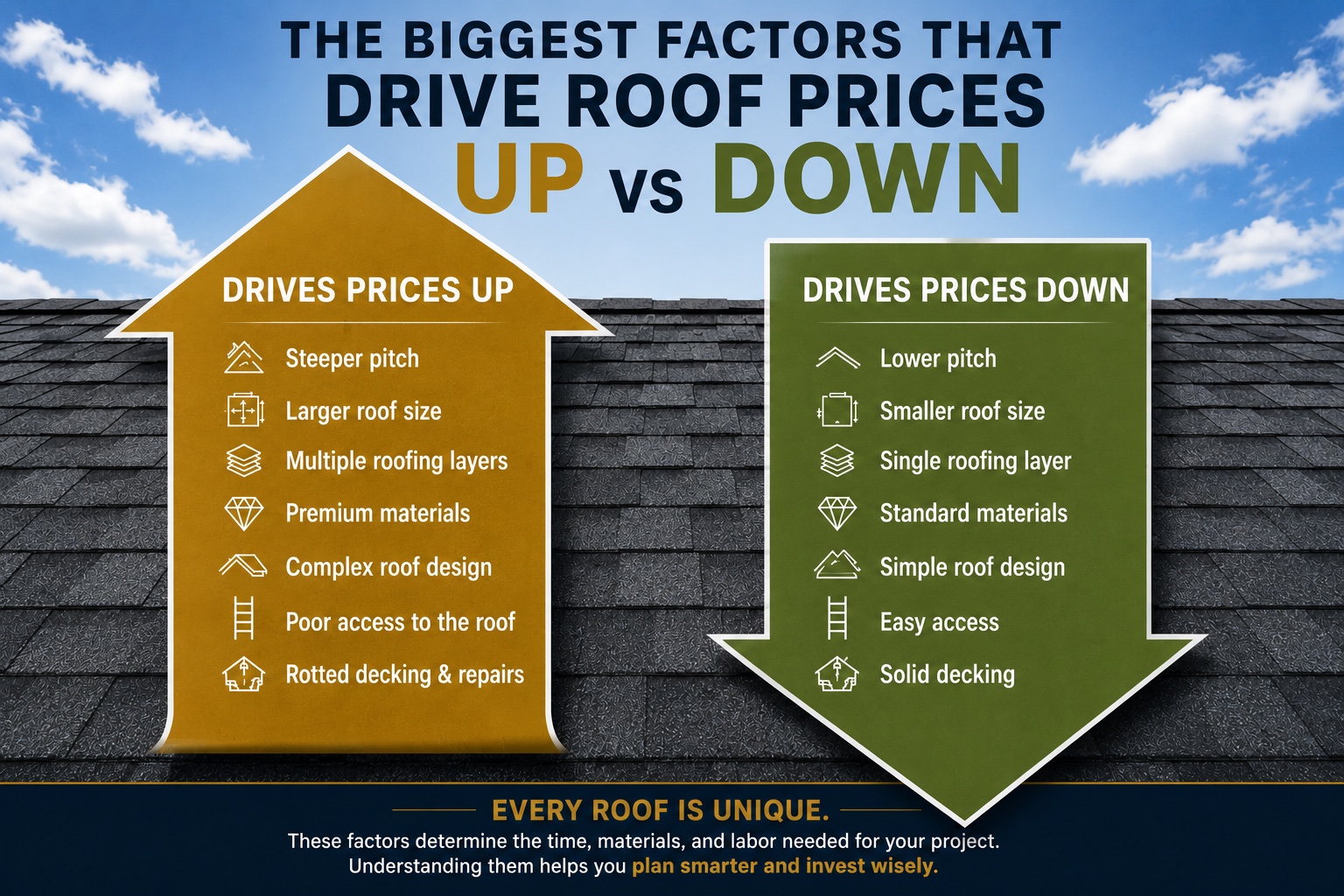
Pushes the price up More work, more material, more time on the roof
A steeper roof
The steeper your roof, the slower and more careful the work. More setup, more safety gear, and more hours on a surface nobody can just walk across.
A bigger roof
More square footage means more shingles, more material underneath, and more labor hours. Size is the single biggest lever on the final number.
A second or third layer
If there is already a layer or two up there, it all has to come off first. That is extra labor plus dump fees before a single new shingle goes on.
Ventilation upgrades
If your attic cannot breathe, we may replace old roof vents with a long vent that runs along the peak of the roof. It protects the new roof, and it adds to the job.
Rotted wood repairs
Soft or rotted wood under the shingles has to be replaced before anything new goes down. We will not lay a new roof over bad wood and hope it holds.
A busy roofline
Every spot where roof sections meet, plus skylights, chimneys, and vent pipes, takes extra cutting and sealing. More angles and openings on the roof means more labor.
Can bring it down Simpler roofs, less to remove, nothing extra to fix
A single clean layer
One existing layer that comes off easily keeps both labor and dump costs low.
A walkable slope
A lower, gentler slope the crew can stand on safely moves faster and costs less to work on than a steep one.
A smaller, simpler roof
Less square footage and fewer angles and sections means less material and fewer hours from start to finish.
Solid wood and good airflow
If the wood underneath is healthy and your attic already breathes well, there is nothing extra to repair or add.
Easy access
A single story with a clear yard to stage materials and protect landscaping makes for a smoother, cheaper job.
A standard shingle
A standard, good-quality shingle costs less than a designer or luxury line, and still carries a strong manufacturer warranty.
Most of this lives where you cannot see it. How steep the roof is, how many layers are up there, the condition of the wood underneath, the way it is sealed around chimneys and vents, almost none of it is easy to judge from the driveway. That is why an accurate roof price usually comes from a close-up look, not a glance from the street.
Why the Roofing Material You Choose Changes the Price
Two things move a roof price more than anything else: the size of the roof and the material you put on it. Size we covered above. Material is the other big lever, and around North Idaho three of them cover almost every home: asphalt shingles, metal, and synthetic. They are not close on price, and they are not close on how long they last, so it helps to know what each one is before you compare quotes.
Asphalt shingles: the everyday standard
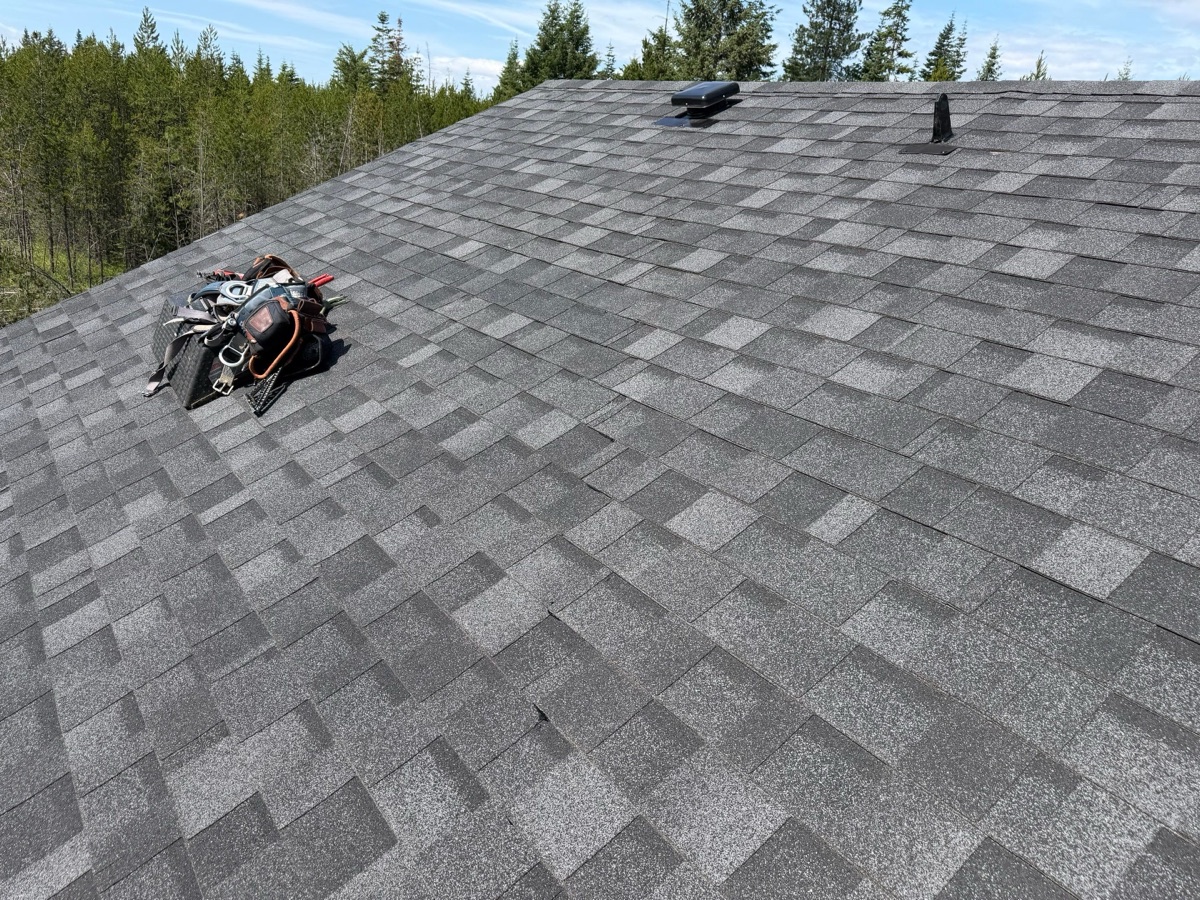
Asphalt is the most common roofing material used, and for good reason. It is the lowest cost to install, comes in nearly every color and style, and is easy to repair or replace down the road. A quality architectural shingle, like the CertainTeed asphalt shingles we install, lasts around 30 to 50 years. The trade-off is that it does not last as long as metal or synthetic, and cheaper grades wear faster. For most homeowners, it is the practical, budget-friendly choice.
Metal: the long-haul option
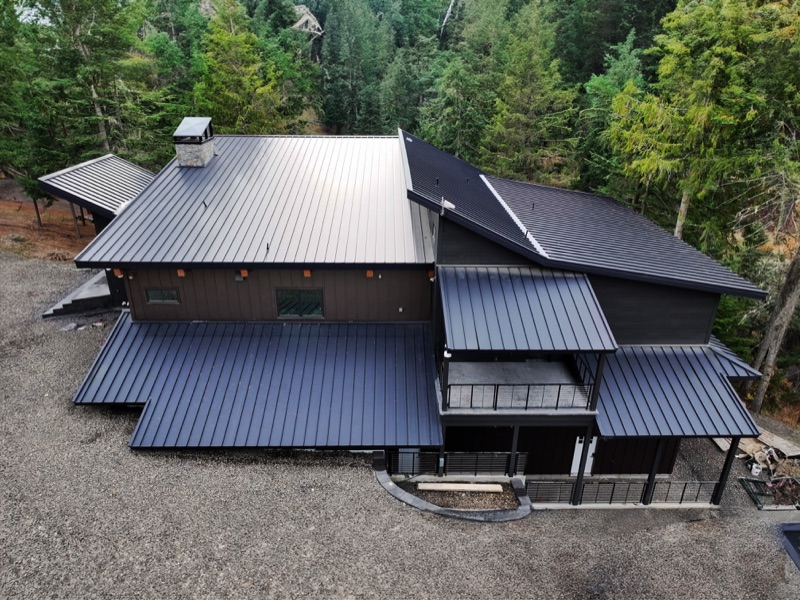
Metal costs more upfront than asphalt, but it lasts decades longer, often 40 to 70 years, and it shrugs off wind, snow, and fire. It sheds snow instead of holding it, which matters in North Idaho. There are two main kinds of metal roof, and the difference shows up in both the price and the upkeep.
Exposed-fastener metal is the more affordable kind. The panels are screwed down through the face of the metal, so the screw heads show. It is a strong, budget-friendly metal roof, but those rubber-gasketed screws wear out. Every 10 to 15 years the gaskets dry out and start letting water in around the screws, so the roof needs a "re-screw," where each screw is backed out and replaced with a slightly larger one to grab fresh metal. That upkeep is the trade-off for the lower price.
Concealed-fastener metal, like standing seam and snap-lock, hides all the fasteners under the panels, so there is nothing exposed to wear out. It is essentially maintenance-free and the most durable option, but it costs more, often landing close to a synthetic roof. So metal really floats between asphalt and synthetic on price, depending on the style you choose.
Synthetic (like Brava): the high-end look
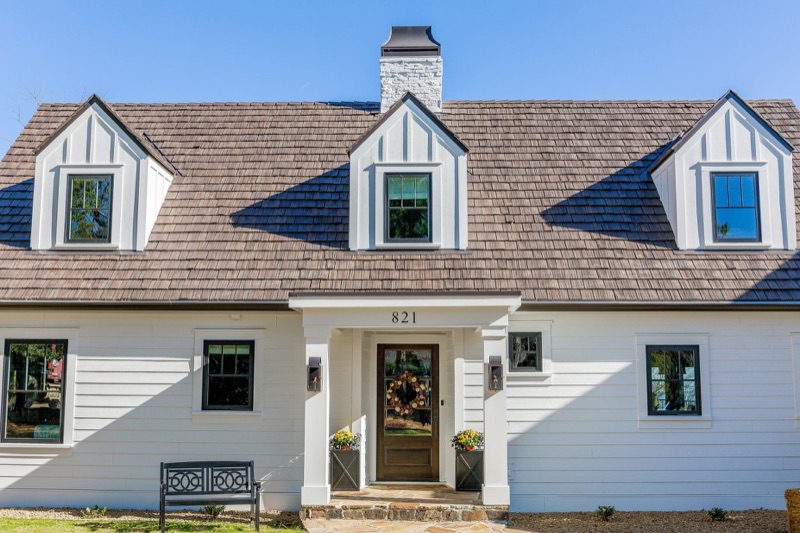
Synthetic shingles, like the Brava we install, are made to mimic the look of real cedar shake or slate without the weight, rot, or upkeep. They are impact and fire resistant and can last 50 years or more. This is the top of the price range, so it fits homeowners who want that high-end look and long life and plan to stay put. For a deeper look, see our guide on Brava synthetic roofing.
Here is a plain comparison, from lowest cost to highest.
| Material | Upfront cost | Lifespan | Best fit for |
|---|---|---|---|
| Asphalt shingle | Lowest | About 30 to 50 years | Most homes, budget-minded owners, or a roof before selling |
| Metal, exposed fastener | Moderate | About 30 to 50 years | Budget-minded owners who do not mind a re-screw every 10 to 15 years |
| Metal, standing seam | High | About 50 to 70 years | Long-term owners who want durability with little upkeep |
| Synthetic (Brava) | Highest | 50 years or more | Owners who want a cedar-shake or slate look that lasts |
So which one is right for you? It mostly comes down to two things: how long you plan to stay, and your budget. If you are selling soon or watching the budget, asphalt is the sensible pick. If you are staying for the long haul and want the roof to outlast you with less upkeep, metal or synthetic can be worth the higher upfront cost. For a closer side-by-side on the two most common choices, our guide on architectural shingles vs. metal roofing goes deeper than we will here, and our materials page walks through everything we install.
Match the material to your plans. The best roof is the one that fits how long you will be in the house and what you want to spend. Staying for years, a longer-lasting material can pay off. Selling soon or on a budget, a quality asphalt roof is hard to beat for the money.
How to Get a Ballpark Before We Come Out
If you want a rough number before you schedule anything, run your address through our instant roof estimate. It measures your roof from satellite imagery and gives you a ballpark in a couple of minutes, no phone call required. Treat it as a starting point, not a final quote.
The real number comes after we get on the roof. We check how steep it is, count the layers, look at the wood underneath, and see how it is sealed around chimneys and vents, then put a clear, written price in front of you. For the full picture of what a roof replacement involves, or a deeper breakdown of the typical cost of a roof replacement, those go further than a calculator can.
Curious what your roof might run before you talk to anyone? Our instant roof estimate measures your roof from satellite imagery and gives you a ballpark in a couple of minutes.
Get My Instant EstimateFrequently Asked Questions
What has the biggest impact on the cost of a roof replacement?
Size is the single biggest factor. More square footage means more shingles, more material underneath, and more labor hours. After that, the things that move the price most are how steep the roof is, how many old layers have to be removed, how many angles and sections it has, the condition of the wood underneath, and the grade of shingle you choose.
Why are two roof replacement quotes for the same house so different?
Usually because they are not quoting the same work or the same materials. One bid might include removing two old layers, replacing soft or rotted wood underneath, and a heavier shingle, while another assumes an easy removal and a basic, lower-cost shingle. The grade of shingle alone can swing the price a lot, so compare what each quote actually includes, not just the bottom line.
Is a cheaper shingle ever the right choice?
Sometimes, yes. If you are selling the house soon and just need a sound, presentable roof, a more affordable architectural shingle can be a reasonable call, as long as you understand you are trading long-term, non-prorated coverage for a lower price today. If you are staying in the home for years, a heavier shingle with a longer, non-prorated warranty, like the CertainTeed we install, usually pays off in coverage and lifespan.
Does a steeper roof cost more to replace?
Yes. The steeper the roof, the slower and more careful the work, with more setup, more safety equipment, and more hours on a surface the crew cannot simply walk across. A low, gentle slope is faster and cheaper to work on than a steep one.
How can I estimate my roof replacement cost without scheduling a quote?
You can get a ballpark in a couple of minutes with our instant roof estimate, which measures your roof from satellite imagery and gives you a rough number. It is a starting point, not a final quote. The exact price comes after we get on the roof and see how steep it is, the layers, and the condition of the wood underneath.
The Bottom Line
A roof price is really a measurement: how big and complex the roof is, what is hiding under the old shingles, and the grade of material that goes back on. That is why two honest quotes can look very different and both be fair, and why the material you choose deserves as much thought as the number at the bottom of the page. When you compare bids, look at what each one actually includes, not just the total. If you want a rough number to start with, the instant estimate is a good first step.